
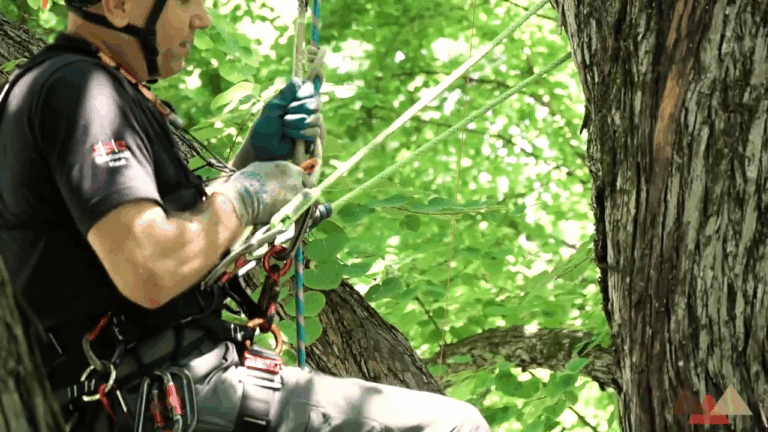
A step-by-step guide to setting up and using the HAAS system for efficient vertical movement when climbing through obstructed environments. So lets look into Using the HAAS Modified Walking System for Ascending Through Limbs
Introduction
Ascending ropes in tree care, rope access, or rescue environments often looks smooth and effortless when the rope hangs freely. A standard rope-walking system — using a chest attachment, foot ascender, and hitch — works perfectly when there are no obstacles in the way. But as soon as branches or limbs interrupt the path, the situation changes. Dragging a walking system through obstructions becomes inefficient, awkward, and frustrating.
That is where the HAAS modified walking system comes in. This variation on the rope-walking method adds equipment and complexity but pays off in stability, efficiency, and comfort when moving upward through limbs. By incorporating a knee ascender connected to a secondary foot loop, climbers can create a smoother, more powerful step that minimizes wasted energy and reduces system drag.
This blog walks through the setup, operation, and advantages of the HAAS system, while also addressing body positioning, technique, and field applications.
The Problem With Standard Rope-Walking in Limbed Environments
When using a standard rope-walking system in a straight, vertical environment, the process is efficient. Each step alternates between the right and left foot, with the foot ascender engaging the line while the hitch advances upward. Hands rest lightly above the hitch for stability, and progress feels natural.
However, as soon as limbs interfere with the line, the system struggles:
-
The rope catches on branches, dragging the hitch or foot ascender into awkward positions.
-
The climber’s upward motion becomes uneven, forcing stops and restarts.
-
Energy output increases significantly, even for short distances.
-
Frustration builds as the climber fights both the rope and the tree instead of making steady progress.
In tree care and rescue alike, efficiency matters. The longer a climber struggles, the more fatigue sets in — and in rescue environments, time wasted can put lives at risk.
Introducing the HAAS Modified Walking System
The HAAS system was developed to solve these inefficiencies. It incorporates an additional device — the HAAS Knee Ascender — along with a foot loop on the climber’s left foot. Together, these additions provide two points of rope engagement per step:
-
The right foot ascender engages the rope directly.
-
The left foot, connected to the HAAS Knee Ascender, advances the hitch by pulling the rope upward at the knee.
The result is a smooth, stair-like climbing motion where each step contributes to rope advancement. Instead of dragging the system upward, the climber builds efficiency through leverage and balance.
Equipment Required
To build a HAAS modified walking system, you’ll need:
-
Standard Rope-Walking Setup
-
Primary rope with hitch cord and hitch climber system
-
Chest or sternal attachment point
-
Right-foot ascender
-
-
Additional HAAS Components
-
HAAS Knee Ascender device
-
Foot loop or strap for the left foot
-
Connector (tether) linking the HAAS to the sternal attachment
-
This is slightly more gear-intensive than a basic walking system, but each piece has a clear role in creating efficiency.
Step-by-Step Setup of the HAAS System
1. Prepare the Sternal Attachment
-
Begin with your sternal connection point attached to the base of your tether.
-
This anchor provides a stable connection for the HAAS device later in the setup.
2. Install the Right-Foot Ascender
-
Place your primary foot ascender on the rope, typically attached to your right foot.
-
This will serve as the anchor point for upward steps.
3. Add a Left-Foot Loop
-
Create an additional foot loop for your left foot, using a short strap or dedicated webbing.
-
This loop will connect directly to the HAAS Knee Ascender, giving your left leg a rope-driven role.
4. Attach the HAAS Knee Ascender
-
Clip the HAAS device onto the rope beneath the hitch.
-
Connect the tether from the HAAS to your sternal attachment.
-
Route the foot loop strap from the HAAS down to your left foot.
5. Fine-Tune and Test
-
Adjust the lengths of the tether and foot loop so the HAAS engages cleanly when you lift your left leg.
-
Test small steps to ensure the rope advances smoothly and the hitch rises without drag.
Technique for Ascending with the HAAS System
Smooth Step Motion
-
Right Foot: When you raise your right foot, the foot ascender grips the rope and acts as your anchor.
-
Left Foot: As you raise your left foot, the HAAS Knee Ascender advances the rope upward, effectively pushing your hitch higher.
-
Together, this creates a “walking up stairs” effect, with each step moving you higher on the line.
Body Positioning
-
Keep both hands above the hitch to stabilize your torso.
-
Face the trunk of the tree or structure to control body alignment.
-
Take small, controlled steps rather than lunging upward. This conserves energy and prevents overloading your devices.
Efficiency Gains
-
Both legs are actively contributing to rope advancement.
-
The hitch moves automatically with each step, reducing hand input.
-
Drag from limbs is minimized because the HAAS creates consistent upward pull, not jerky movement.
Benefits of the HAAS Modified Walking System
Efficiency Through Obstacles
Unlike dragging systems, the HAAS method uses controlled steps to overcome rope snags and limb interference. This is particularly useful in:
-
Tree climbing and arbor work
-
Rescue ascents through wooded canopies
-
Industrial access with structural obstructions
Reduced Fatigue
By spreading the workload across both legs and using leverage at the knee, climbers experience:
-
Less strain on arms and grip.
-
Fewer pauses to reset or untangle the system.
-
More consistent energy output over long climbs.
Greater Stability
The tethered HAAS connection keeps the climber centered and balanced, especially when navigating around branches or leaning into the trunk for clearance.
Improved Safety
-
Smooth, predictable movement lowers the chance of sudden slips or jerks.
-
Redundancy in multiple ascenders reduces single-point failure risk.
Field Applications
The HAAS system is widely adopted in tree care, where arborists frequently ascend through limbs. It’s also applicable in rescue environments, such as:
-
Tree-based rope rescues where patients are located mid-canopy.
-
Confined structural rescues where beams, pipes, or crossbars act like “limbs.”
-
Training environments where efficiency and safety are paramount.
By mastering both standard walking and HAAS variations, climbers can adapt to any environment.
Training Considerations
Like all advanced systems, the HAAS setup requires practice. Rescuers and arborists should:
-
Train in controlled environments before live operations.
-
Focus on step rhythm and balance to avoid wasted effort.
-
Drill with obstructed ascents to replicate real-world conditions.
Conclusion
The HAAS modified walking system transforms climbing through obstructed environments. While a basic rope-walking setup works perfectly in clean, vertical lines, it struggles when limbs or obstacles interfere. By adding a knee ascender, foot loop, and tether connection, the HAAS system turns every step into progress, delivering smoother, safer, and more efficient ascents.
Yes, it requires more equipment. But the payoff is significant: less fatigue, better balance, and greater adaptability when climbing through trees, structures, or any environment where the rope path is not perfectly clear.
Next Step: Add the HAAS to your training repertoire. Practice in tree canopies or obstacle-rich settings until the rhythm becomes second nature. The investment in gear and practice time will reward you with greater efficiency and safety in the field.
Peace on your Days
Lance