Tactical Rappel Techniques for Rapid Descent and Urban Operations
The tactical rappel is a high-speed descent technique used in military, law enforcement, and technical rescue missions. Unlike traditional recreational rappelling, tactical rappels prioritize speed, stealth, and precision. These techniques are used to rapidly insert personnel into hostile environments, evacuate victims, or gain vertical access in complex terrains like cliffs, buildings, or industrial structures.
This guide covers the setup, execution, limitations, and best practices for tactical rappelling—ensuring safe, efficient, and mission-driven performance in the field.
What Is Tactical Rappelling?
Tactical rappelling is a specialized rope descent method tailored for fast deployment in high-stakes environments. It enables rescuers or operators to move from height to ground level with minimal delay, often while carrying gear or operating in low-visibility or high-risk scenarios. The technique demands focused training, reliable gear, and sharp situational awareness.
1. Setting Up a Tactical Rappel
The effectiveness of any tactical rappel begins with the right setup. Every piece of equipment must be ready for high-stress use, with an emphasis on speed and functionality.
Anchor Selection
-
Use bombproof anchor points capable of handling dynamic loads.
-
Urban anchor options may include building frames, support columns, or vehicle chassis.
-
Natural terrain setups may rely on trees, large boulders, or bolted rock features.
-
Always verify anchor redundancy if time and mission allow.
Rope Management
-
Deploy a low-stretch, abrasion-resistant rope suited for tactical applications.
-
Flake the rope carefully to avoid tangles during rapid deployment.
-
Use a rope bag to streamline deployment and protect from snagging or contamination.
Descent Control Device
-
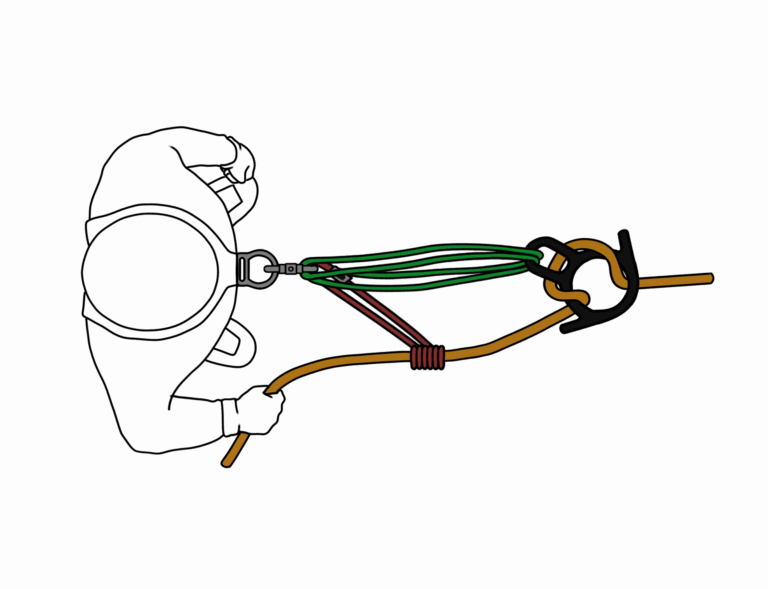
Select a device that balances speed and control, such as the Petzl ID, CMC CLUTCH, MPD, or figure-8 descender.
-
Rig the system for fast engagement and ensure all components are locked and aligned.
Harness and Personal Equipment
-
Use a lightweight, tactical harness that supports freedom of movement.
-
Secure all carabiners and locking mechanisms before approaching the edge.
-
Wear full PPE: helmet, gloves, protective uniform, and mission-specific gear.
Edge Protection
-
Always protect the rope at the edge to prevent abrasion and prolong rope life.
-
Use purpose-built edge rollers or soft protection materials where possible.
2. Executing the Tactical Rappel
The defining quality of a tactical rappel is the balance between speed and control. Smooth execution is critical for operator safety and mission success.
Approach and Position
-
Move into position with rope pre-rigged and connected to your harness.
-
Perform a final check on anchors, descent device, and personal connection.
-
Maintain 360° situational awareness—look for visual cues, movement, or environmental hazards.
Edge Transition
-
Transition over the edge confidently and smoothly, keeping body control.
-
Avoid sudden movements that could swing or unbalance your descent.
Controlled Descent
-
Use your brake hand to regulate speed, applying firm control.
-
Maintain a wide, balanced foot stance—using the surface to guide descent rhythm.
-
Adjust speed based on visual contact, team coordination, or potential threats.
Landing and Disengagement
-
Approach the landing zone cautiously.
-
Land softly and disengage from the rope system quickly to clear the drop zone.
-
Prepare for immediate action depending on mission goals.
3. Limitations of Tactical Rappelling
While tactical rappelling is highly effective, it comes with operational risks and situational constraints. These limitations must be acknowledged to ensure safety under pressure.
Equipment Dependency
-
Every rappel is only as reliable as the gear used. Faulty anchors, damaged ropes, or improperly rigged devices can lead to system failure.
-
Pre-mission inspections are non-negotiable.
Environmental Hazards
-
High winds, slick surfaces, and unstable terrain can compromise movement and braking.
-
Urban settings may include glass shards, sharp metal edges, or toxic environments that require enhanced caution.
Physical Demands
-
Operators must be able to descend under load, control their body in motion, and recover rapidly at the bottom.
-
Tactical rappelling is not forgiving of poor conditioning or lack of familiarity.
Reduced Redundancy
-
Tactical speed sometimes comes at the cost of backup systems.
-
Operators must understand the risk-benefit tradeoff of minimal gear configurations.
Training Requirements
-
Tactical rappelling demands ongoing training and scenario-based practice.
-
Operators must be fluent in both standard and emergency protocols.
Best Practices for Tactical Rappelling
To enhance safety and performance in tactical descent operations:
-
Inspect All Gear: Before every rappel, check ropes, anchors, devices, and personal gear.
-
Use Edge Protection: Prevent rope damage with purpose-built edge guards or padding.
-
Communicate Clearly: Use hand signals, radio, or verbal cues depending on the environment.
-
Maintain Awareness: Always know where your teammates, threats, and landing zones are.
-
Train Continuously: Run drills in daylight, darkness, confined spaces, and vertical access environments.
Conclusion
The tactical rappel is more than just a fast way down—it’s a mission-critical capability that enables rapid movement, stealth entry, and efficient rescue. When executed with precision and preparation, it provides operators with a decisive advantage in high-risk situations.
By combining disciplined setup, practiced execution, and constant awareness, you can deploy the tactical rappel confidently in urban, wilderness, or hostile environments—knowing your descent system is secure, streamlined, and field-ready.
Peace on your Days
Lance