
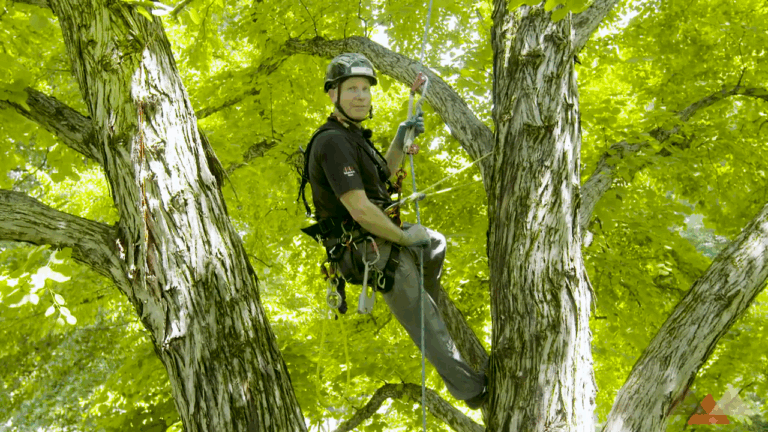
There are many climbing systems and acronyms in the world of arboriculture. One popular system that is still being fully defined in the industry is the Single Rope Descent using a Stationary Work System. This approach offers a unique blend of control and efficiency. It masterfully bridges the gap between old and new methods, creating a descent experience that is both smooth and highly intuitive. This technique perfectly mimics the familiar feeling of a doubled rope system on the descent, yet it comes with the revolutionary advantage of a stationary line, which means no additional friction as you navigate the tree’s architecture.
For those who’ve spent years working with a doubled rope setup, the shift to a single rope system can seem daunting. However, this particular stationary system is designed to feel familiar, making the transition seamless. It allows the arborist to use the same fundamental body mechanics and hand positions that have been a cornerstone of the industry for decades. The result is a descent that feels just as natural, but with significant improvements in rope management and overall safety. This powerful combination of a well-known feel and modern benefits is why the stationary rope system is quickly becoming a preferred choice for climbers looking to elevate their technique.
The Art of the Single Rope Descent
The beauty of a stationary rope system lies in its simplicity and responsiveness. On an actual descent, the movements are a direct copy of a traditional doubled rope system. With two hands on the line, you maintain complete control over your speed. The basic mechanics are straightforward: one hand manages your hitch, while the other acts as your brake hand on the trailing line. This two-handed control gives you precise command over your movements, allowing for subtle adjustments as you navigate branches and other obstacles.
The system is designed to provide immediate feedback. When you want to slow down, you simply adjust the position of your trailing line. Likewise, if you need to speed up, a slight change in orientation is all it takes. This intuitive control makes the stationary rope positioning system a powerful tool for arborists working in complex and dynamic environments. Unlike systems that require complex levers or hardware adjustments, this method relies on the climber’s own practiced skill and muscle memory. The result is a fluid, graceful descent that is entirely in your hands, giving you the confidence to move with purpose.
Controlling Your Speed with Rope Orientation
The key to controlling your descent with a stationary rope system is understanding the relationship between the rope’s orientation and its effect on your hitch. It’s a simple concept with profound practical implications. To slow down your descent and provide maximum braking force, you should move the trailing line to a more horizontal position. This changes the angle of the line and increases the friction on your hitch, allowing you to stop or descend at a very slow, controlled pace.
Conversely, if you want to speed up your descent, you simply adjust the trailing line to a more vertical orientation. This lessens the angle on the hitch, reducing friction and allowing you to move down the line more quickly. It’s a subtle movement, but a skilled climber can feel the immediate change in speed. This ability to make instant, fine-tuned adjustments on the fly is a major benefit. It means you can quickly move between branches without the hassle of reconfiguring your system, allowing for an efficient and effortless flow.
The Stationary Advantage
The defining feature of this system is right in its name: stationary rope positioning. As you descend, the rope itself does not move. This is a radical departure from traditional systems, where the rope is constantly being pulled and dragged through the tree. The benefits of this stationary approach are immense.
First, you eliminate friction. When your rope is stationary, it never rubs against the branches or bark of the tree. This prevents the constant, abrasive friction that can cause premature wear on both your rope and your climbing hitch. By preserving your gear, you extend its lifespan, saving you money and ensuring your equipment remains in top condition. More importantly, it removes a major source of potential rope damage, which is a critical safety consideration.
Second, the lack of rubbing means your descent is incredibly consistent. There are no sudden changes in friction due to an unexpected snag or a rough patch of bark. The hitch itself remains perfectly smooth and consistent throughout the entire descent, giving you a predictable and reliable feel every single time. As you move downward and come into contact with another branch, you’ll notice the rope simply bends around it without any of the binding or grabbing that can happen with a moving line. This smooth interaction with the tree’s natural structure makes for a safer and more enjoyable descent.
Why This Technique is an Evolution
For decades, the doubled rope system was the gold standard for many climbers. It was reliable and familiar, but it came with inherent drawbacks, primarily the friction created by dragging the rope through the tree. Every movement, every descent, and every traverse added wear and tear. The stationary rope positioning system is a logical and powerful evolution. It takes the familiar, reliable feel of a doubled rope descent and improves upon it in every significant way.
By eliminating rope movement, this system frees the climber from the burden of managing friction. It means more time can be spent focusing on the task at hand, whether that’s a tricky cut or a delicate branch removal. It represents a step forward for the entire industry, offering a technique that is not only more efficient but also better for both the arborist and the tree. It’s a perfect example of how innovation can build upon a proven foundation to create something truly revolutionary.
Peace on your Days
Lance