Prusik Hitch Self Belay for Rappelling Safety
The Prusik hitch self-belay is a simple and reliable method for providing backup protection during a rappel. This technique involves using a friction hitch, specifically the Prusik knot, to create a hands-free safety system that engages automatically if the rappeller loses control of their descent. The self-belay is an essential skill for both recreational climbers and technical rescue professionals, offering an additional layer of safety without requiring a separate belayer.
What is a Prusik Hitch?
The Prusik hitch is a friction knot that can slide along a rope when not under tension but grips the rope securely when weight is applied. This makes it an ideal choice for a self-belay system, as it automatically engages if the rappeller loses control, stopping their descent.
Key Characteristics of a Prusik Hitch:
- Friction-Based: The knot tightens around the rope when tension is applied.
- Bi-Directional Grip: The Prusik hitch can hold in both directions, making it versatile for various rope applications.
- Adjustable: The knot can be adjusted along the rope when not under tension, allowing the user to reposition it as needed.
Setting Up a Prusik Hitch for Self-Belay
To use a Prusik hitch for self-belay during a rappel, follow these steps:
- Select a Prusik Loop: Use a loop of accessory cord that is approximately 60-70% of the diameter of the main rope. The cord should be tied into a loop using a double fisherman’s knot.
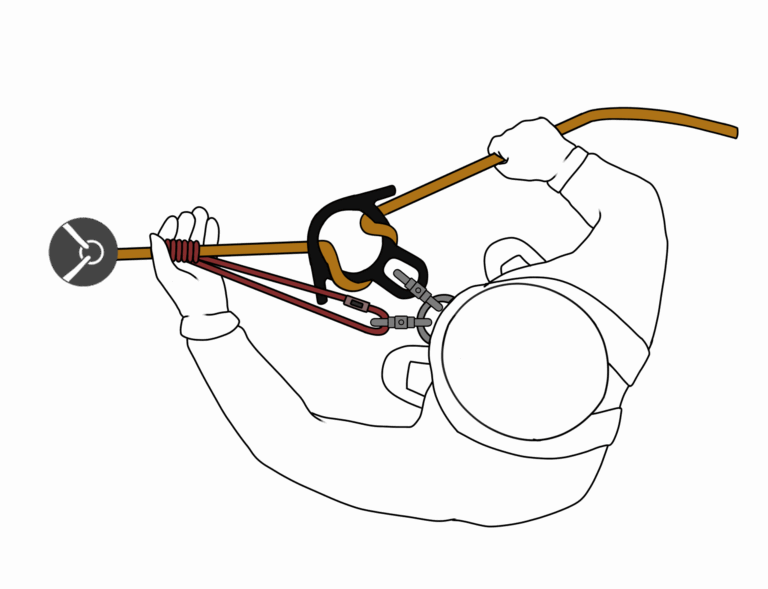
- Attach the Prusik Loop to the Rope: Wrap the loop around the rappel rope two to three times, creating the Prusik hitch. Ensure the wraps are snug and evenly spaced.
- Connect the Prusik Loop to Your Harness: Use a locking carabiner to attach the Prusik loop to your harness’s belay loop. Make sure the carabiner is locked and secure.
- Position the Prusik Hitch: Slide the Prusik hitch up the rope, positioning it above your descent control device. This ensures that the hitch will engage if you lose control of your descent.
How the Prusik Hitch Self-Belay Works
During the rappel, the Prusik hitch slides along the rope as the rappeller descends. If the rappeller loses control or releases their brake hand, the hitch tightens around the rope and stops the descent automatically.
The self-belay system works by:
- Engaging Automatically: The Prusik hitch grips the rope when weight is applied, preventing an uncontrolled descent.
- Providing Hands-Free Backup: Once engaged, the hitch allows the rappeller to regain control without needing additional assistance.
Advantages of the Prusik Hitch Self-Belay
- Simple and Effective: The Prusik hitch is easy to tie and provides reliable backup protection.
- Hands-Free Operation: The self-belay system engages automatically, allowing the rappeller to focus on their descent.
- Lightweight and Portable: The Prusik loop and carabiner are lightweight and easy to carry, making this system practical for various environments.
- Versatile: The Prusik hitch can be used on different types of ropes and in various rappel scenarios.
Considerations and Limitations
While the Prusik hitch self-belay is a valuable safety tool, there are some important considerations and limitations to keep in mind:
- Rope Compatibility: The diameter of the Prusik loop must be appropriate for the rappel rope to ensure the hitch grips effectively.
- Friction Heat: The hitch can generate heat during long descents, potentially damaging the cord or the main rope. Regular inspection of the gear is essential.
- Positioning: The Prusik hitch must be positioned correctly to avoid interference with the descent control device.
- Engagement Delay: There may be a slight delay in engagement if the hitch is not properly tensioned before the rappel.
Best Practices for Using a Prusik Hitch Self-Belay
- Practice Tying the Prusik Hitch: Ensure you are comfortable tying the hitch and understand how it functions before using it in a real rappel scenario.
- Inspect Your Gear: Check the condition of your Prusik loop and carabiner before each use to ensure they are in good working order.
- Position the Hitch Correctly: Make sure the Prusik hitch is positioned above your descent control device to allow for proper engagement.
- Use a Locking Carabiner: Always use a locking carabiner to attach the Prusik loop to your harness to prevent accidental detachment.
- Monitor the Hitch During Descent: Keep an eye on the Prusik hitch during your descent to ensure it slides smoothly and engages when needed.
Conclusion
The Prusik hitch self-belay is a reliable and effective backup system for rappelling. By providing automatic engagement in case of a loss of control, it enhances safety and gives the rappeler added confidence during their descent. Proper setup, gear inspection, and practice are essential to ensure the system functions correctly. With the Prusik hitch self-belay in place, rescuers and climbers can rappel with greater peace of mind, knowing they have a dependable safety mechanism in place.
Peace on your Days
Lance