Horizontal Rigging Systems for Rescue: Tracklines, Taglines, and Twin Rope Offsets
Horizontal rigging systems are essential tools in technical rescue—bridging terrain that would otherwise limit safe movement, patient transport, or equipment access. These systems allow rescue teams to span horizontal gaps or redirect vertical access using overhead tension lines, floating directionals, and anchored systems.
This blog walks through five key modules in horizontal rigging—each presenting a distinct configuration and purpose. Whether you’re setting up a simple control-side trackline or building a dual rope offset system over a hazardous drop, the core concepts remain: tension, direction, control, and redundancy.
1. Terrain Pre-Planning and System Visualization
Concept: Mapping and preparing highline systems in crowded, cluttered, or high-use terrain.
Before any rope is deployed, you need a clear map of terrain constraints, user flow, and anchor viability. In a crowded climbing area or popular recreational site, your rigging decisions must account for fixed features, public safety, and operational clarity.
Training Emphasis:
-
Identify pre-existing hazards (loose rock, compromised anchors, high foot traffic)
-
Sketch load paths and directional vectors before setup
-
Assign staging zones, edge protection plans, and anchor labeling before system buildout
-
Understand how anchor triangulation and pulley placement are limited by topography
This module reinforces that strategic rigging begins long before any hardware hits the field. Clean layout equals operational confidence.
2. Tandem Tension and Twin Highlines
Concept: Using twin lines for directional control, redundancy, and lateral movement.
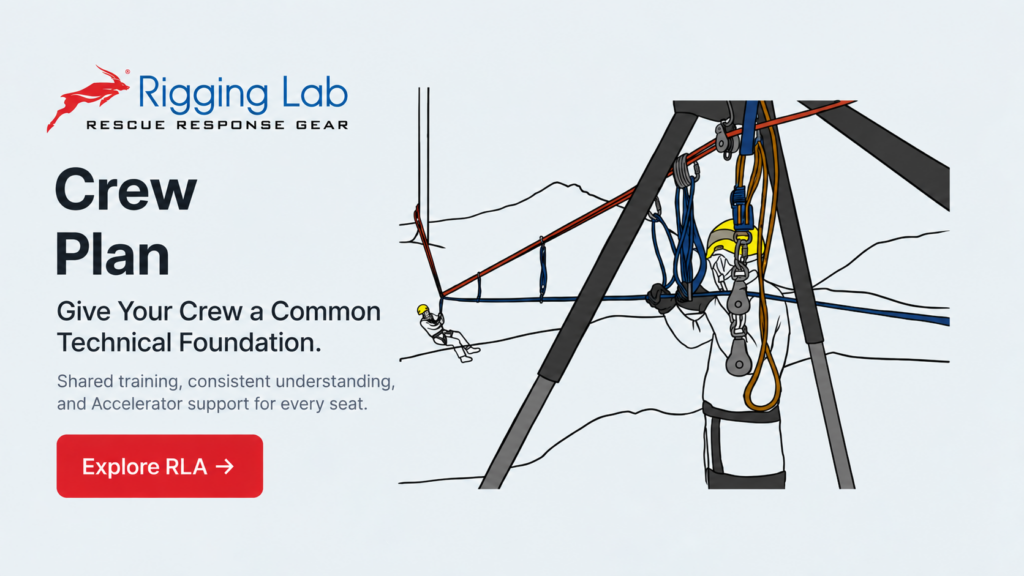
Twin highlines are configured with parallel tracklines—offering smoother transitions and redundancy under load. Unlike single-line systems, they split the load across two anchored paths and allow for greater control, especially during tensioned movement or extended span rescues.
Training Emphasis:
-
How to rig twin tracklines with symmetrical anchors or independent anchor trees
-
Implementing manned belays vs. self-belay in horizontal transitions
-
Creating working platforms between tracklines for gear stowage, patient transfer, or technician repositioning
-
Building systems with tensionless anchors to reduce shock loads at connection points
Tandem tension adds complexity—but also opens up modular pathways for multiple rescues or gear movements along a single span.
3. Single Trackline Highlines and Load Transfer
Concept: Using a single horizontal line for load support and directional control across a span.
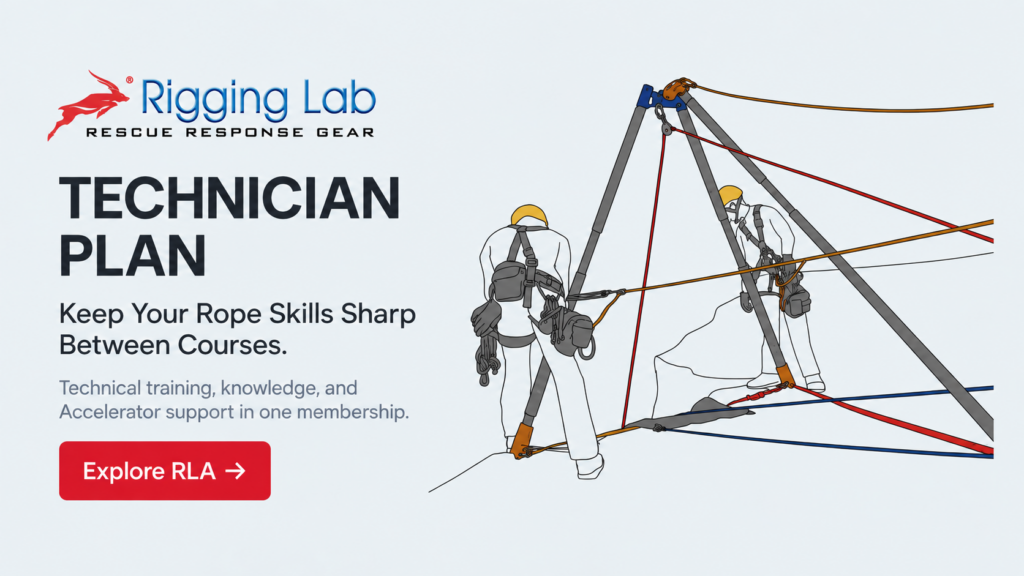
Single trackline systems are straightforward but require precise alignment and tensioning. The main rope must pass through one or more elevated AHDs (like a floating A-frame or gin pole) to provide overhead support while maintaining directional control.
Training Emphasis:
-
How to rig the control side with secure, load-rated anchors
-
Floating high points: when and how to deploy a gin pole or A-frame to elevate your trackline
-
Methods for terminating rope at the far anchor and managing rope slack
-
Carriage system construction: integrate pulleys or trolleys for patient or gear movement
-
Deploying control lines to laterally maneuver the load along the span
Single tracklines offer clean, quick horizontal travel—but with fewer options for redundancy or multi-directional shift. This system is ideal for short, narrow gaps or light patient movement across traverses.
4. Twin Bundle / Dual Trackline Highlines
Concept: Creating dual-trackline systems for redundancy, load distribution, and dynamic management.
In dual trackline systems, two ropes are set parallel with independent tensioning and anchoring. These are often used in dynamic environments—where changing terrain, high loads, or potential failure demand full redundancy and force management.
Training Emphasis:
-
Building independent anchors for each rope—ensuring they are not load-sharing unless intended
-
Coordinating mainline and belay systems through separate carriages or mirrored pulley paths
-
Evaluating and adjusting elevated anchor systems to prevent cross-loading or pulley misalignment
-
Adding dynamic directionals such as change-of-direction pulleys to manage resultants
This configuration allows for high-stakes rescues where a second line isn’t just backup—it’s part of the overall load control and movement strategy.
5. Major Taglines and 2-Rope Offset Systems
Concept: Using diagonal rope geometry and offset control systems to move loads laterally and vertically in irregular or multi-plane terrain.
In this configuration, systems are designed for asymmetric spans, off-angle transitions, or complex yoke-based load distribution. Two ropes—mainline and tagline—are anchored at separate angles to give precise control over a moving load.
Training Emphasis:
-
Building major taglines to shift suspended loads horizontally under tension
-
Configuring 2-rope offset systems where main and belay lines work together but do not mirror each other
-
Using gin poles for offset directionals when edge clearance is limited
-
Rigging the yoke between mainline and tagline to distribute load evenly
-
Managing control-side gear, friction points, and communication for real-time adjustments
Offset systems require a deep understanding of resultant forces, anchor triangulation, and real-time load tracking. Used correctly, they allow movement across non-linear spaces—like diagonal drops, obstacle fields, or craggy cliff faces.
Training for Terrain with Horizontal Systems
Each of these systems represents a different solution to a familiar problem: how do we move people or gear when gravity alone isn’t an option?
By mastering:
-
Pre-rig planning and load path mapping
-
Highline construction across single and dual configurations
-
Offset rope systems for directional navigation
-
Advanced use of AHDs like gin poles and floating frames
…you equip yourself with the tools to handle horizontal rescue with precision and professionalism.
Peace on your Days
Lance