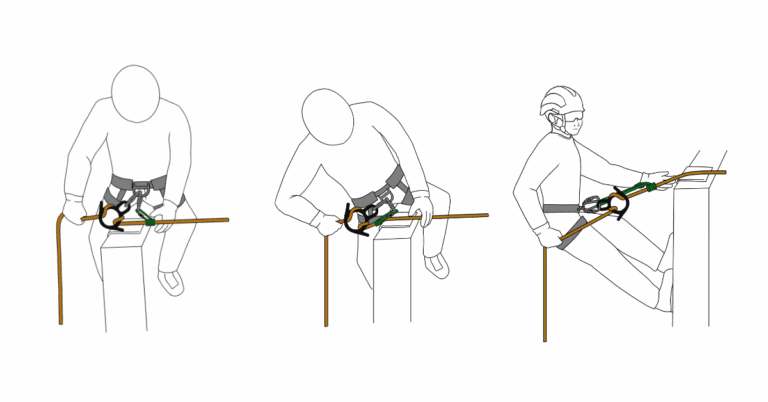
Good Rappel Technique
A controlled rappel is one of the most fundamental—and revealing—skills in rope rescue. Whether you’re navigating a vertical cliff face, industrial structure, or urban high-rise, your technique reflects not just personal proficiency but your ability to manage risks for the entire team. Good rappel technique isn’t about speed or style. It’s about consistent control, efficient motion, and respecting both the rope system and the terrain.
While the mechanics may seem straightforward, the details matter. Poor rope management, hasty starts, or neglecting your brake hand can turn an otherwise simple descent into a dangerous evolution. Mastering the basics ensures each rappel remains deliberate and adaptable under pressure.
Key Principles of Proper Rappel Technique
Here are the core principles every rope rescue technician should internalize and practice with consistency:
Maintain a Smooth and Steady Descent
The hallmark of good rappel technique is a smooth, uninterrupted motion from top to bottom. Sudden stops or jerky movements not only stress the rope system but can also unbalance the rescuer or lead to pendulum swings on sloped or irregular surfaces.
-
Avoid bouncing or abrupt changes in speed.
-
Let the friction device do the work—your body follows.
-
Maintain muscle tension for balance, not braking.
Control Your Speed
Descending too quickly is one of the most common errors and potentially the most dangerous.
-
High-speed descents cause friction-induced heat buildup, which can degrade ropes and devices.
-
Fast rappels reduce reaction time, impair decision-making, and increase the likelihood of collisions or entanglements.
-
Keep a deliberate pace that allows continuous evaluation of rope path, anchor security, and team communication.
Respect Your Brake Hand
Your brake hand is non-negotiable. It is your ultimate fail-safe and the sole regulator of your descent.
-
Never remove your brake hand from the rope.
-
Use it to apply pressure against the descent control device and modulate your speed.
-
Keep your brake hand well below the device, not near it or behind your back.
The brake hand is not where shortcuts happen—it’s where self-discipline shows up.
Position and Use the Guide Hand
The guide hand (non-brake) stabilizes the rope above your descent control device, helping to manage rope flow without gripping too tightly.
-
Maintain a relaxed grip—too much pressure introduces unwanted friction.
-
Use your guide hand to feed rope smoothly into the device without jerking or bunching.
-
Avoid wrapping the rope around your hand or wrist—this can quickly become a hazard if slack builds or a load shift occurs.
Choose Your Descent Path Wisely
Before starting your rappel, read the terrain like a map. A clear line down doesn’t mean it’s the safest one.
-
Scan for sharp edges, overhangs, and potential rope snag points.
-
Consider rope stretch zones—where dynamic loading may come into play.
-
Identify foot placement options: ledges, stable walls, or friction zones that aid descent control.
Rope Management and Slack Control
Nothing ruins a clean rappel faster than rope chaos.
-
Flake your rope before use and inspect it for knots, tangles, or wear.
-
If using a rope bag, let it feed naturally from the pack—don’t dump rope all at once unless you’ve confirmed a hazard-free drop zone.
-
Maintain rope tension throughout the descent to avoid slack loops or whip-back near your feet or anchor.
Common Mistakes to Avoid
Even seasoned rescuers make errors. Awareness is your first corrective measure.
-
Descending too fast – accelerates wear and decreases control.
-
Letting go of the brake hand – a non-starter. No exceptions.
-
Failing to communicate with team – always verify your descent window and anchor readiness.
-
Skipping pre-rappel gear checks – even one missed buckle or worn device can compromise the rappel.
Practice Builds Confidence, and Confidence Builds Safety
Good rappel technique is a repeatable process. The more often you practice under varied conditions—different surfaces, anchor types, and rope systems—the better prepared you’ll be for real-world rescue scenarios.
Controlled rappelling isn’t just about getting down—it’s about staying in the game the whole way down. From anchor to landing, every movement matters.
Peace on your Days
Lance