
Carabiner How To Guide
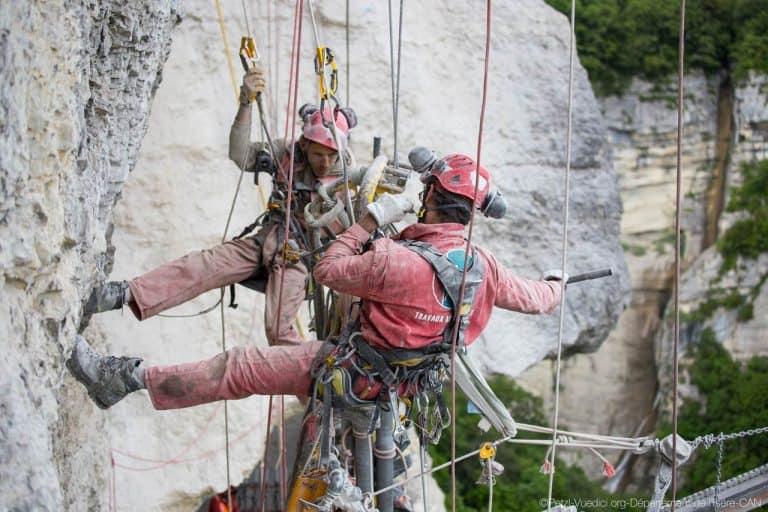
Carabiners are the backbone of any rigging or rescue system. These versatile connectors come in various shapes, sizes, and locking mechanisms, each tailored for specific applications. Whether you’re working in technical rescue, rope access, or recreational climbing, selecting and using the right carabiner is critical to safety and efficiency. This guide outlines key considerations to help you make informed decisions when choosing and using carabiners.
Carabiner Shapes

Understanding Carabiner Basics
A carabiner’s primary purpose is to connect and secure components in a system, but its performance is only as good as its design and application. The major axis strength, gate mechanism, and locking system determine its reliability and suitability for different scenarios.
Key Components:
- Major Axis: The strongest axis, designed to handle the majority of the load.
- Gate Mechanism: Enables opening and closing for attachment and detachment.
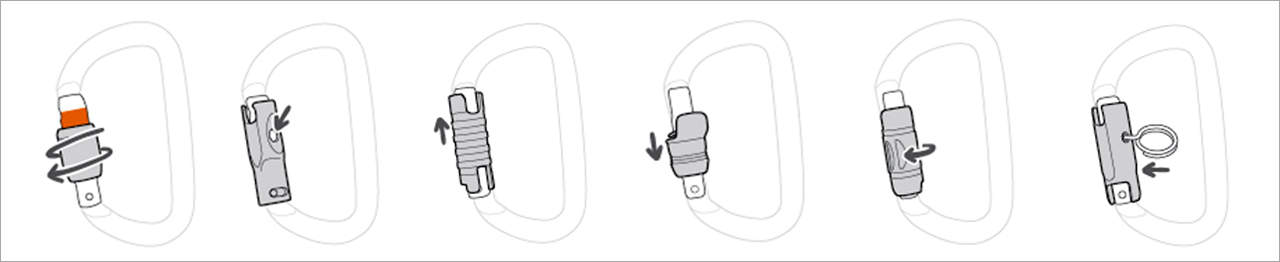
- Locking System: Prevents accidental gate opening, available in manual (screw-lock) and automatic (twist-lock, triple-lock) variants.
Carabiner Locking Systems
Choosing the Right Carabiner
- Carabiner Shape:
- D-Shape: Ideal for general use, providing excellent strength-to-weight ratio.
- Pear-Shape (HMS): Best for belaying and rope handling, offering versatility.
- Oval: Suitable for pulley systems and equalizing loads.
- Asymmetrical D: Combines strength with a larger gate opening.
- Locking Mechanisms:
- Screw-Lock: Reliable and easy to use, but requires manual locking.
- Twist-Lock: Automatically locks when closed, offering quick operation.
- Triple-Lock: Adds an extra layer of security, ideal for critical applications.
- Material:
- Aluminum: Lightweight, ideal for recreational and less demanding tasks.
- Steel: Heavier but more durable, perfect for rescue and industrial use.
- Specific Features:
- Captive Bar: Prevents rotation and maintains proper orientation.
- Keylock Nose: Reduces snagging during operation.
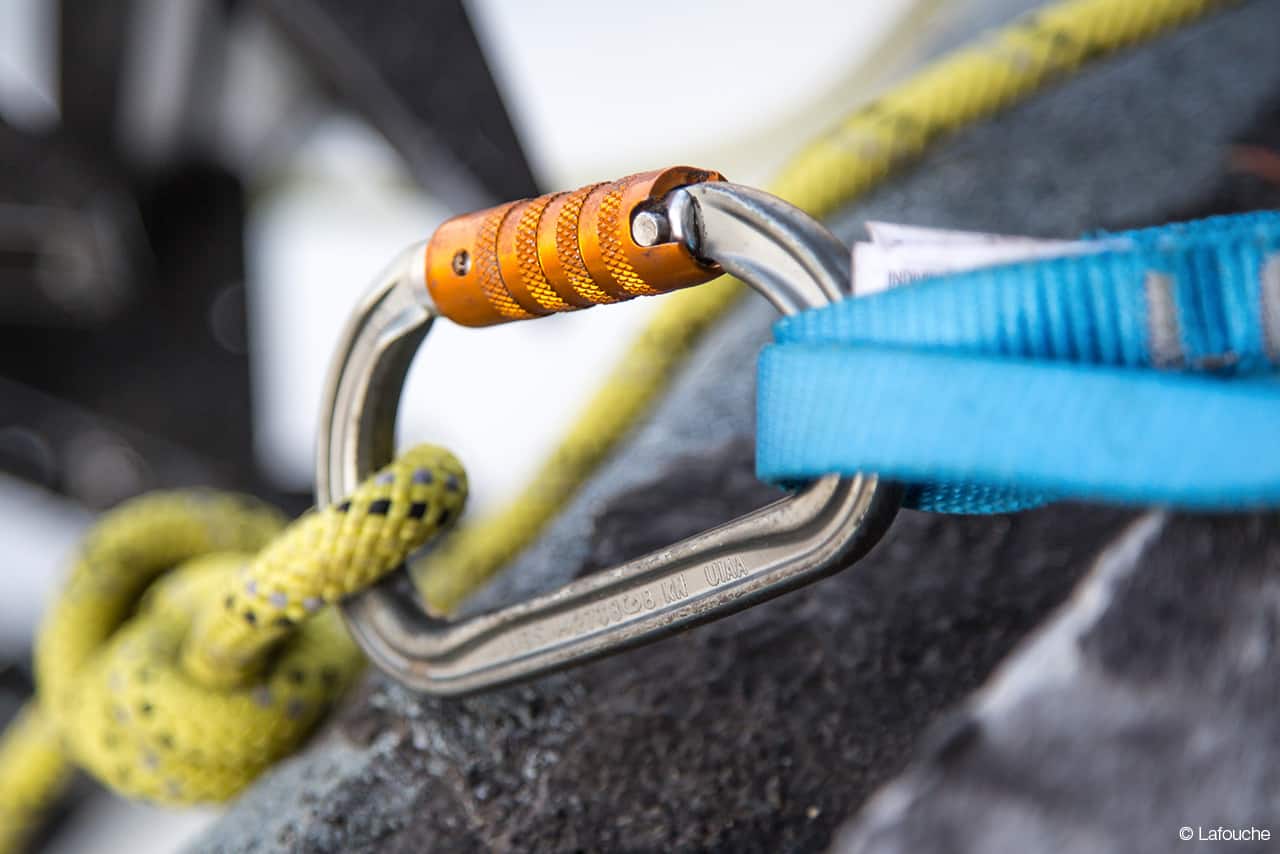
A carabiner is designed to be weighted along its primary axis, with the gate closed and locked. This is the carabiner’s strongest position. All other positions increase the risk of a break or accidental opening and therefore present a danger to the user.
Using Carabiners Safely
Proper usage is essential to maximize the strength and functionality of your carabiner. Here are some critical guidelines:
1. Load on the Major Axis:
Always position the load along the carabiner’s major axis, keeping the gate closed and locked. Avoid side-loading or loading across the minor axis, as this significantly reduces strength.
2. Avoid Gate Interference:
Ensure ropes, anchors, or other components do not press against the gate. A forced gate opening can lead to system failure.
3. Check Locking Mechanisms:
Regularly inspect locking carabiners to confirm the gate is securely locked. With screw-lock carabiners, manually check the sleeve to ensure it hasn’t loosened.
4. Monitor Wear and Tear:
Look for signs of damage, such as grooves from rope friction, corrosion, or a weakened gate spring. Retire carabiners showing significant wear or deformities.
Carabiner Applications in Rigging and Rescue
- Progress Capture Systems: Use oval or D-shaped carabiners to maintain proper alignment and reduce rope friction in hauling systems.
- Belay and Descend: HMS carabiners are ideal for connecting belay devices or descenders to the harness.
- Anchor Connections: Steel carabiners are preferred for anchor points due to their durability and strength.
- Pulley Systems: Opt for carabiners with high gate clearances to accommodate multiple ropes or devices.
Choosing the right carabiner to connect a device to your harness
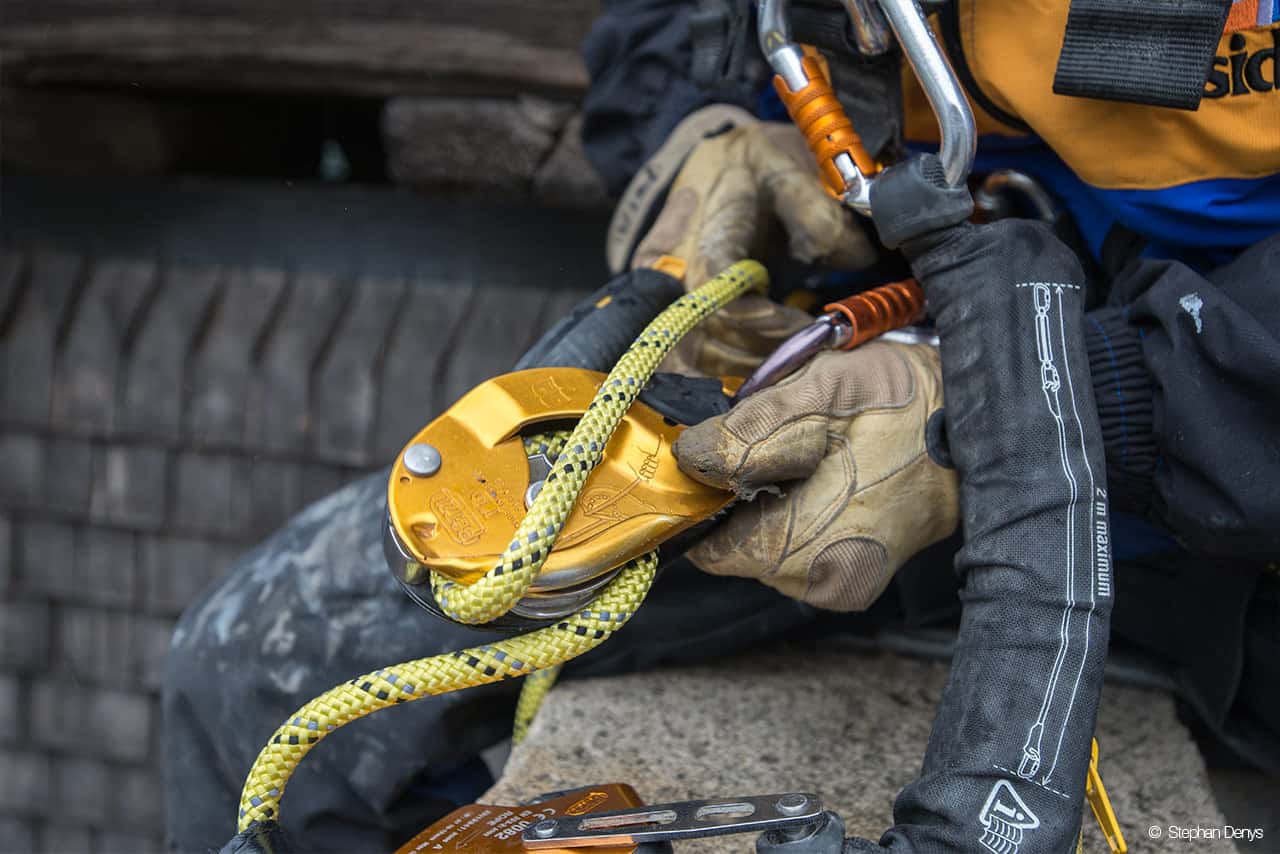
Based on a carabiner’s shape, size of the opening, and frequency of use, different devices do not connect to a harness with the same carabiner. The following tech tips will provide you with recommendations on the right carabiner to choose for several key devices.
Choosing the right carabiner for anchoring ropes, lanyards, hauling systems, and other uses

Training and Best Practices
To optimize the performance of your carabiners:
- Participate in training sessions to familiarize yourself with different carabiner types and their uses.
- Practice proper rigging techniques and stress test systems under controlled conditions.
- Follow the manufacturer’s guidelines for each carabiner to ensure safe and effective use.
Related Resources:
- Rigging Lab Academy’s Complete Carabiner Course
- Petzl Carabiner Selection and Compatibility
- Anchor Systems and Carabiner Integration
Conclusion
Carabiners are indispensable tools for rigging and rescue operations. Understanding their design, applications, and safety protocols ensures you can select the best carabiner for any task while maintaining optimal safety. Equip yourself with the knowledge and practice necessary to make the most of these critical connectors.
Peace on your Days
Lance




Comments are closed.