Bottom Belay in Rappelling Operations
Bottom belay—often referred to as a fireman’s belay—is one of the simplest and most effective safety backups used during rappelling. In this method, a team member positioned at the bottom of the rappel manages the rope and can apply tension to stop or slow the descent if the rappeller loses control. While straightforward in execution, the bottom belay plays a vital role in safeguarding rappelling operations across training, recreation, and technical rescue scenarios.
What Is a Bottom Belay and How Does It Work?
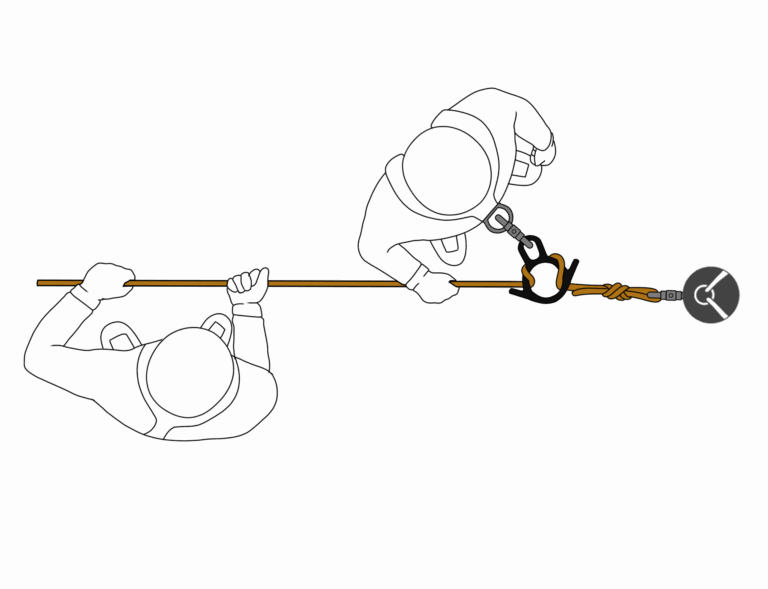
In a bottom belay, the belayer holds the free (tail) end of the rappel rope from the ground. By pulling downward on the rope, they increase friction in the descent control device used by the rappeller—such as a figure eight, Petzl ID, or ATC. This additional tension can stop the rappeller’s descent or slow it significantly without requiring complex gear or rigging.
Step-by-step setup for a bottom belay:
-
Positioning: The belayer stands in a safe, stable location directly beneath the rappel path.
-
Rope Management: The belayer holds the tail end of the rappel rope with both hands, maintaining light tension.
-
Monitoring: Throughout the descent, the belayer watches the rappeller and remains ready to respond.
-
Stopping: If the rappeller needs assistance or loses control, the belayer applies firm downward pressure, sharply increasing rope tension at the device and arresting movement.
Benefits of the Bottom Belay System
Despite its simplicity, the bottom belay offers multiple operational advantages:
-
Fast Deployment: Requires no additional hardware beyond the rope already in use.
-
Minimal Training Curve: Easy to learn and teach, even to new team members or students.
-
Reliable Backup: Provides immediate control if the rappeller panics, slips, or experiences gear failure.
-
Ideal for Ground Teams: Offers a meaningful role for ground-based personnel during operations.
-
Effective in Low-Angle to Vertical Terrain: Particularly suitable for controlled environments, such as training towers, canyons, or industrial vertical access.
Limitations and Considerations
While effective, the bottom belay is not a universal solution and must be applied with situational awareness:
-
Limited by Rope Length and Stretch: On long descents or dynamic rope systems, the delay in tension feedback can reduce effectiveness.
-
Requires Clear Communication: Without line of sight or auditory cues, the belayer may not know when to act unless pre-established signals are used.
-
Belayer Must Be Attentive: Distraction or inexperience at the bottom can compromise the entire backup system.
-
Not a Substitute for Primary Safety Systems: This technique should augment, not replace, competent rappel rigging, device usage, and self-rescue readiness.
Best Practices for Bottom Belay Execution
To ensure the bottom belay functions properly and safely, follow these critical best practices:
-
Use Proper Commands: Standardize communication with the rappeller:
-
“On belay” – Belayer is ready and watching
-
“Belay on” – Confirmation to the rappeller
-
“Stop!” – Immediate tension application needed
-
-
Maintain Tension, Not Slack: Slight tension keeps the belayer engaged and responsive, while avoiding premature braking.
-
Avoid Jerky Movements: Apply controlled, firm pressure to prevent destabilizing the rappeller mid-descent.
-
Stay Clear of Fall Zones: Position the belayer away from direct overhead hazards like falling gear or rockfall.
-
Monitor Rope Slack Carefully: Excess slack can delay response time and reduce friction effectiveness.
When to Use a Bottom Belay
The bottom belay is especially useful in:
-
Training Environments: Ideal for teaching rappelling fundamentals in controlled settings.
-
Short-to-Mid Length Descents: Most effective when the belayer can maintain tactile connection and visible feedback.
-
Team-Based Rope Access: When multiple personnel are coordinating a system, a bottom belay adds a passive layer of safety.
-
Emergency Interventions: Serves as a fast, practical backup when a rappeller shows signs of fatigue, fear, or disorientation.
Bottom Belay vs. Other Belay Methods
Compared to top-side belays, tandem Prusiks, or mechanical belay devices, the bottom belay stands out for its accessibility and immediacy. However, it lacks the full control of a dedicated mechanical device or independent belay line.
In higher-risk environments—such as suspended rescues, unknown anchor quality, or patient extractions—consider using the bottom belay in combination with a self-belay system or an independent backup line.
Final Thoughts
The bottom belay remains a staple in the toolbox of rope rescue teams, rope access professionals, and recreational climbers. Its value lies not in complexity, but in the confidence it offers—a simple, effective safety measure that’s easy to deploy and reliable when needed most.
By practicing good communication, proper technique, and attentive rope management, teams can harness the bottom belay to enhance the overall safety and professionalism of any rappelling operation.