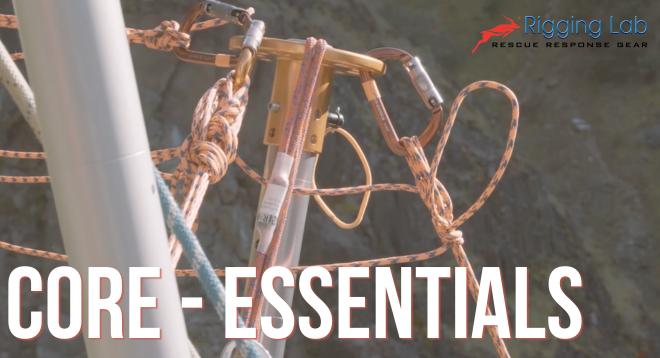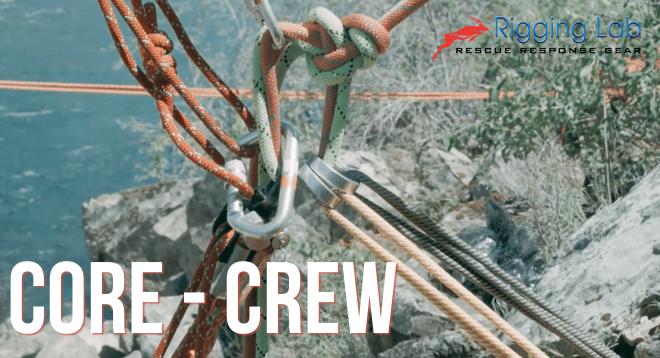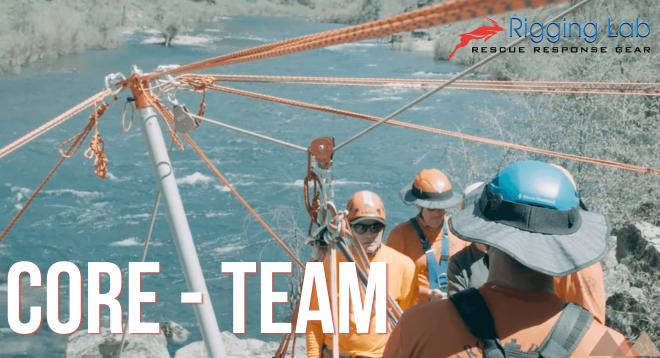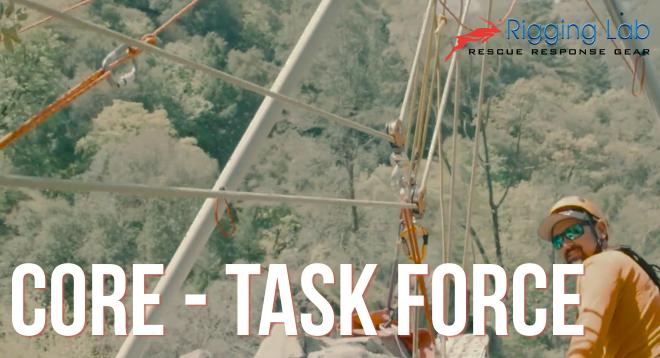
Every rope rescue begins and ends with anchors. Without a secure foundation, even the most advanced mechanical advantage systems or high-directional setups are compromised. When substantial natural anchors are absent at the fall line, rescuers must create reliable alternatives that provide stability, redundancy, and adaptability. One of the most versatile solutions is the Bombproof Focused Anchor System.
What Is a Bombproof Focused Anchor System?
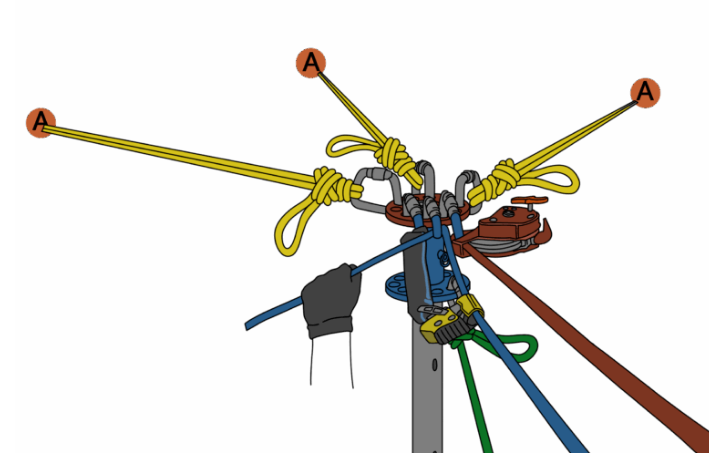
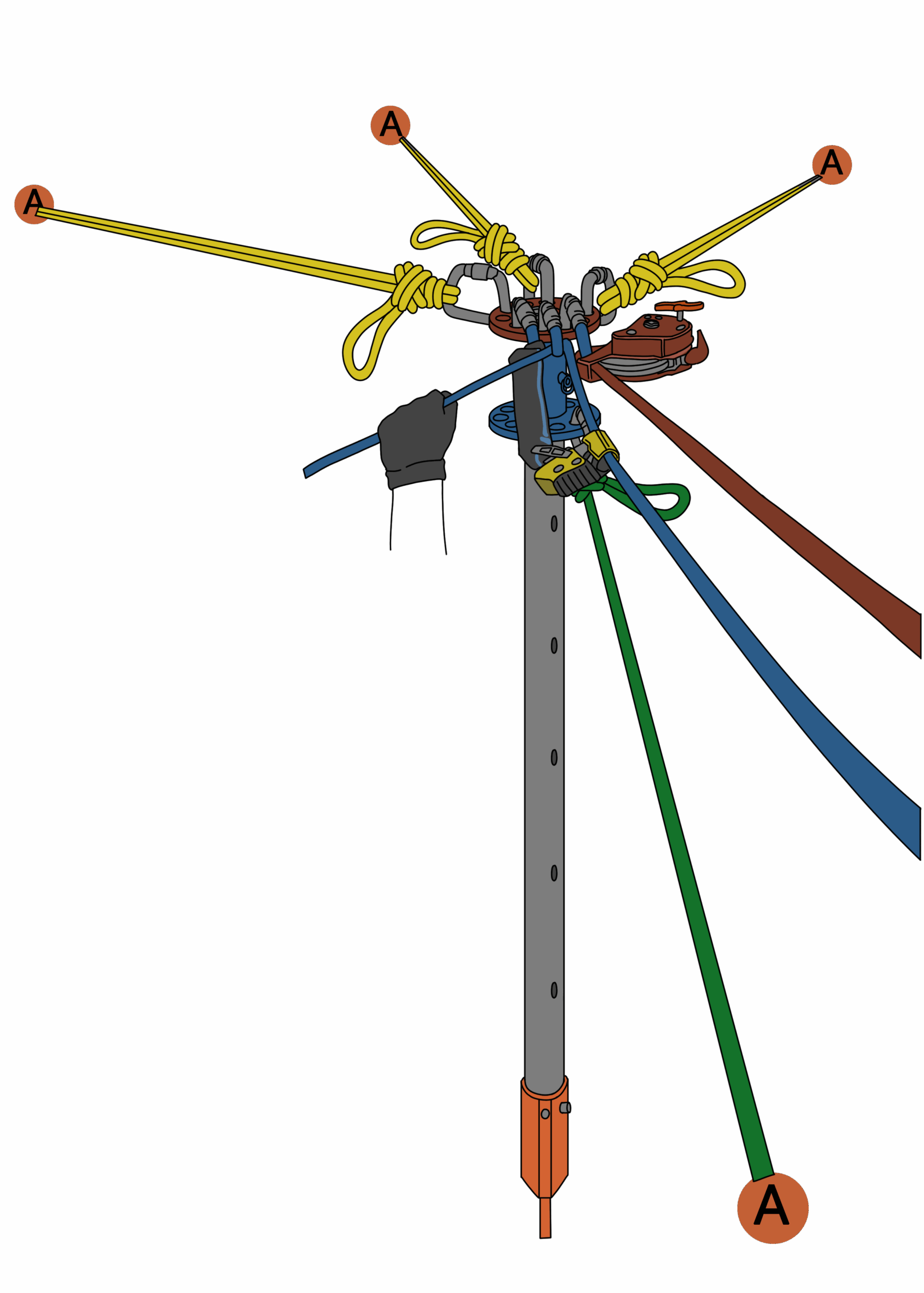
A bombproof focused anchor system is a collection of substantial back-tied anchors arranged to act as a single focal point. Unlike a single-point anchor, this system distributes forces across multiple elements, creating redundancy and reducing the risk of failure.
It is specifically valuable when natural or artificial anchors are available, but none are positioned directly over the fall line. By constructing a floating focal point, rescuers can align main and belay lines with the load path while ensuring strength and stability.
In practice: Think of it as building a “virtual anchor” exactly where you need it, even if the natural anchors are offset or scattered.
Key Components
-
Three or more substantial anchors back-tied to form the foundation.
-
Rigging hardware such as an AZORP or a large anchor plate to centralize the focal point.
-
Back-ties set at appropriate angles (ideally around 30° between anchors).
-
A front-tie anchor placed opposite the load to provide balance and opposition.
This design makes the system suitable for supporting both main and belay lines, as well as personal travel restriction when needed.
Step-by-Step Setup
-
Identify a Suitable Focal Point
-
Select a position that aligns with the fall line and provides a safe work zone for rescuers.
-
Ensure the focal point location keeps the rope path clear of edges and hazards.
-
-
Choose and Prepare Substantial Anchors
-
Locate at least three anchors, each capable of withstanding rescue loads.
-
Position them back from the focal point at no more than 45° separation.
-
-
Set the Front-Tie Anchor
-
Place an opposing anchor to prevent the system from tipping forward.
-
This anchor stabilizes the geometry and keeps the system aligned with the load.
-
-
Build the Back-Ties
-
Run low-stretch rope or webbing from each anchor to the focal point.
-
Maintain roughly 30° spacing between back-ties to balance load distribution.
-
-
Tension the System
-
Carefully tension each back-tie against the front-tie until the focal point is rigid.
-
Avoid over-tensioning, which can introduce unnecessary torque.
-
-
Rig for Main and Belay
-
Attach both main and belay lines to the centralized anchor plate or hardware.
-
Ensure they are kept at the same level to prevent torque or twisting.
-
-
Final Check and Safety Review
-
Confirm redundancy by checking each anchor’s integrity.
-
Inspect angles, hardware, and rope paths before loading the system.
-
Advantages of Bombproof Focused Anchors
-
Adaptability – Creates an anchor in locations where none are directly available.
-
Strength – Distributes forces across multiple substantial anchors.
-
Redundancy – Even if one anchor fails, others share the load.
-
Alignment – Allows rescuers to place the focal point exactly on the fall line.
-
Versatility – Supports main, belay, and personal safety connections.
Safety Considerations
-
Always evaluate anchor integrity before including it in the system.
-
Keep anchor angles narrow to reduce force multiplication.
-
Use hardware like AZORP or anchor plates for clean load distribution.
-
Separate main and belay paths whenever possible to reduce shared risk.
-
Monitor the system under load for settling, creep, or shifting.
When to Use a Bombproof Focused Anchor System
This system is especially valuable in:
-
Cliff rescues where no tree or boulder sits directly above the edge.
-
Urban or industrial environments where structural members are offset from the fall line.
-
High directional operations where a stable, central focal point is needed for both main and belay.
Conclusion
The Bombproof Focused Anchor System is a cornerstone technique for technical rope rescue. By combining multiple substantial anchors into a single, centralized focal point, rescuers gain the flexibility to create secure attachment points exactly where they are needed. This system not only enhances redundancy and safety but also ensures clean alignment of main and belay systems — a crucial factor in every rescue.