An arborist’s work environment is unique, a three-hundred-and-sixty-degree canopy that demands a specialized approach to climbing. This is the essence of The Arborist’s Ascent: The Challenge of the Double Rope System. To access all parts of the tree, an arborist ideally ties into the strongest, most central point they can find. This high central anchor works perfectly for movement throughout the canopy. The problem is that a climber is always married to this single tie-in point. As they move around the tree, their rope comes into contact with many branches, creating additional friction.
This friction is a major challenge for any arborist. Even with tools like a cambium saver to protect the tree and reduce friction, a double rope system remains a physically demanding method of ascent. This inefficiency can tempt a climber to take a shortcut, a choice that can put them at a serious safety risk. The struggle between efficiency and safety is at the heart of the arborist’s ascent.
The Physical Demands of the Ascent
A double rope system gives climbers great control, but the climb itself is physically demanding. To ascend, a climber must pull down twice as much rope as the height they want to gain. For example, to advance four feet, a climber must pull eight feet of rope through their system. The constant friction they fight makes this a difficult and strenuous process.
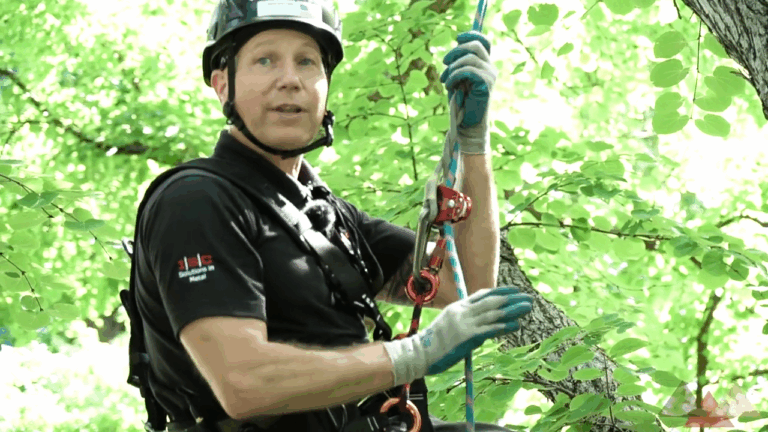
The standard ascent technique is called the “hip thrusting technique.” A climber uses one hand above the hitch and one hand below. They pull down with their entire body, using their hips to take stress off their upper body. However, even with this technique, they still put significant stress on their arms and shoulders. The entire motion consists of controlled, deliberate movements: pull down, slide up, pull down, slide up. It’s a slow and deliberate process that requires immense physical effort and constant attention to form.
The Dangerous Shortcut: The Problem of Slack
The physical inefficiency of the double rope ascent leads to a very common and very dangerous practice: cheating the system. Because it is so difficult to ascend properly, a technician often feels tempted to take a shortcut. Instead of pulling down a full eight feet of rope, they might simply go hand over hand, pulling in small amounts of rope at a time.
Each time a climber takes this shortcut, they introduce more and more slack into the system. As they move their hands up the rope, the slack between their hands and their hitch builds. While this might seem like a small amount, slack can quickly become a major hazard. The climber’s movements are no longer controlled and tied directly to the system. Consequently, a dangerous gap in security appears, where a simple misstep could lead to a sudden and uncontrolled fall.
The Threat of Shock Loading
The dangerous slack directly leads to a shock load. If a climber falls, two things happen. First, the fall heavily shock loads their body. The impact from the fall transfers to their harness and equipment. More importantly, the fall places a powerful shock load on the unrated anchor at the top of the tree.
As a climber, you have no idea of the actual strength rating of the limb you’re tied into. No signs on the tree tell you it can withstand a specific amount of force. A fall with a few feet of slack can multiply the force of impact, potentially causing a shock load strong enough to make the anchor limb fail. This is a very real and common risk. Due to the physical demands of the ascent, a climber is often in a position where they have introduced slack into their system, which opens up the possibility of a catastrophic failure.
The Arborist’s Dilemma
The double rope ascent presents a significant dilemma for the arborist. The safe and proper way to ascend is physically demanding and inefficient. It requires immense strength and discipline to maintain a tight system and avoid the dangerous temptation of introducing slack. However, the easier, quicker way—the shortcut—exposes a climber to the serious risk of a shock load on an unrated anchor.
Ideally, an arborist maintains control and manages their slack the entire time they ascend. But the inefficiency of the system often makes that difficult. This reality has led to the development of newer climbing systems designed to solve this very problem. They allow for a more efficient ascent without compromising on safety. In short, they represent the future of arboriculture. Still, a strong understanding of the challenges of the classic double rope system will always be the mark of a skilled climber.
What are your thoughts on how physical effort and safety are related in tree climbing?
Peace on your Days
Lance