
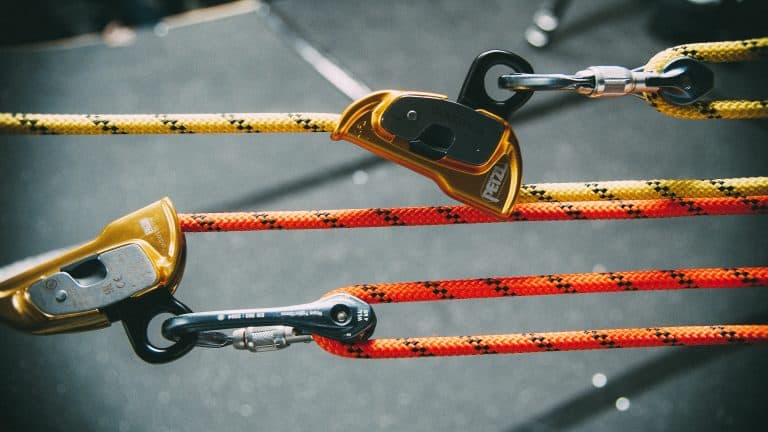
Parallel Hauls and Doubled Mechanical Advantage: Myth or Reality?
In the world of technical rescue and rigging, misconceptions about mechanical advantage (MA) systems can lead to inefficiencies or even unsafe practices. One such myth is that parallel haul systems—where two 3:1s or 5:1s are used side by side—somehow double the mechanical advantage. Today at Rigging Lab Academy, we’re busting that myth with clear data, practical setups, and results that highlight the realities of mechanical advantage.
The Common Misconception
It’s often argued that two 3:1 systems working in parallel produce a 6:1 advantage, or that two 5:1 systems produce a 10:1. On the surface, this seems logical: two systems working together should combine their mechanical advantage, right? The reality, however, is quite different.
Mechanical advantage doesn’t simply add up in parallel systems because each rope shares the load equally. What appears to be a doubling of mechanical advantage is actually just halving the force on each individual rope. The total input force required remains the same.
Breaking It Down: Understanding the Forces
Single Rope Setup
In a single rope system lifting a 180-pound load with a 3:1 MA, the input force required is approximately 60 pounds. This setup assumes ideal conditions with minimal friction.
Parallel Rope Setup
When the load is distributed between two ropes, each rope carries half the total load (90 pounds in this case). Adding a 3:1 system to each rope reduces the force needed to pull each rope individually, but the total input force across both systems remains 60 pounds. The result? No increase in overall mechanical advantage.
The Testing Process
To prove this, Rigging Lab Academy conducted tests using load cells and various setups:
- Single 3:1 System: A baseline was established with a 3:1 system requiring 74 pounds of input force to lift a 160-pound load. This accounts for friction in the system, resulting in an actual MA of approximately 2.16:1.
- Parallel 3:1 Systems: Two 3:1 systems were set up side by side. Each system required approximately 36-40 pounds of input force, but the total force across both systems matched the single 3:1 baseline. No increase in mechanical advantage was observed.
- Ganged 3:1 Systems: When the ropes were tied together at the haul point, the input force decreased slightly due to friction reduction but still did not approach the input force of a true 6:1 system.
- True 6:1 System: Finally, a true 6:1 system was constructed by ganging a 2:1 system onto a 3:1 system. This setup required just 37 pounds of input force to lift the load, clearly demonstrating the difference between actual and perceived mechanical advantage.
Key Takeaways
- Parallel Systems Share Load, Not Advantage
Parallel 3:1 systems split the load between ropes, reducing the force on each rope but not increasing the total mechanical advantage. - True 6:1 Systems Require Specific Construction
To achieve a true 6:1 advantage, systems must be built sequentially (e.g., ganging a 2:1 onto a 3:1) rather than in parallel. - Efficiency and Friction Play a Role
Friction affects the actual mechanical advantage of any system. Testing with tools like the EnForcer load cell provides accurate insights into system performance.
Practical Implications for Rescue Teams
Understanding the mechanics of parallel haul systems is essential for planning efficient and safe operations. Here are some recommendations:
- Focus on System Design: Build systems based on the actual mechanical advantage needed for the operation, not assumptions about combined systems.
- Use Load Cells for Testing: Tools like the EnForcer load cell help verify the performance of your rigging setups.
- Prioritize Training: Misconceptions about mechanical advantage often stem from a lack of hands-on experience. Incorporate training scenarios that test and compare different setups.
Explore more insights into mechanical advantage systems in Rigging Lab Academy: Understanding Mechanical Advantage.
Conclusion
The idea that parallel haul systems double mechanical advantage is a persistent myth, but real-world testing reveals the truth: mechanical advantage doesn’t add up in parallel. By understanding how forces are distributed and testing your setups, you can build more effective and reliable systems for rescue operations. For more in-depth guidance, tools, and courses, visit Rigging Lab Academy.
Peace on your Days
Lance







Comments are closed.