
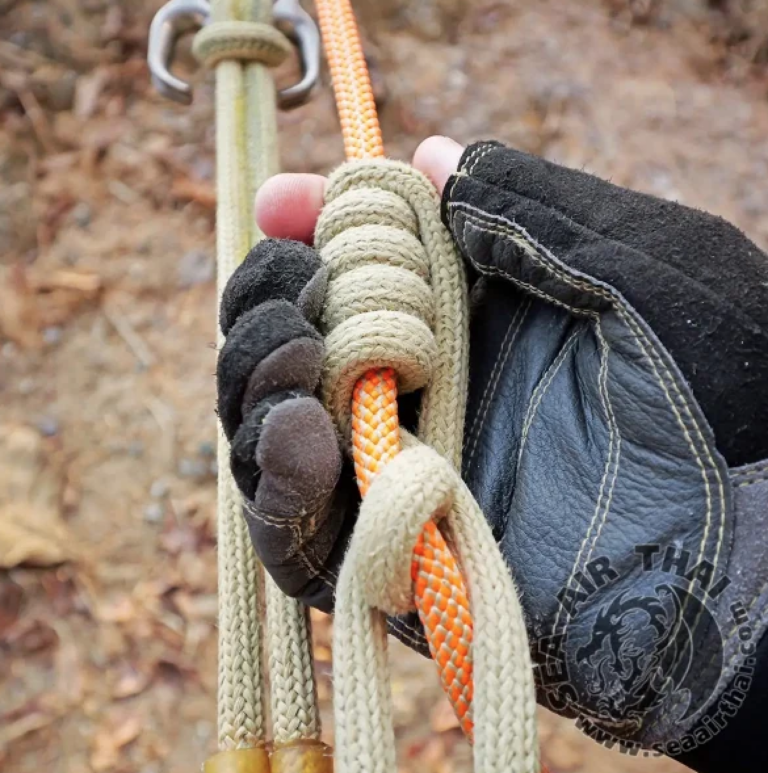
The Importance of Testing and Understanding the VT Prusik Hitch
The VT (6/1) Prusik Hitch isn’t just another tool in a rescuer’s kit; it represents a shift in how we approach technical rigging and rescue systems. Its popularity within mountain rescue, SAR teams, and rope access communities is a testament to its practical advantages. However, its significance goes beyond its ability to hold loads or resist slippage. To fully appreciate the VT Prusik Hitch, we must examine not only its performance but also why it matters in the broader context of rescue operations and rigging systems.
Why the VT Prusik Hitch is Important
1. Enhancing Safety in High-Stakes Environments
Safety is the cornerstone of every rescue operation, and friction hitches like the VT play a pivotal role in system stability. The VT Prusik’s ability to hold static rescue loads, combined with its predictable behavior during slippage, minimizes the risk of catastrophic failures. For rescuers, knowing that their hitch will perform as expected under load provides a critical layer of confidence when lives are on the line.
- Example: During edge transitions or overhauls, where systems are subject to significant forces, the VT’s reliable holding force ensures control and safety throughout the operation.
2. Advancing Efficiency in Technical Rescue
Efficiency is often the difference between success and failure in time-sensitive rescue scenarios. The VT Prusik’s unique design allows for quick tying and untying, reducing setup time while maintaining strength and reliability. This is particularly valuable in dynamic rescue situations where speed and adaptability are paramount.
- Why It Matters: In rescue scenarios involving confined spaces or high-angle environments, a simple, fast, and secure hitch like the VT allows teams to adapt quickly to evolving challenges.
3. Supporting Rescuer Training and Skill Development
Technical rescue teams must train to higher standards than those required in real-world operations. The VT Prusik Hitch offers a consistent, reliable platform for learning and honing advanced rigging techniques. Its performance under controlled conditions mirrors real-world applications, making it an ideal training tool.
- Why It Matters: Training on tools that perform predictably enables rescuers to build muscle memory and confidence. This translates to faster, more accurate responses in live rescue scenarios.
4. Pushing the Boundaries of Rigging Science
The research surrounding the VT Hitch highlights the importance of continually testing and refining tools in technical rescue. By evaluating factors such as material variability, reuse performance, and slippage characteristics, the industry gains valuable insights into improving both equipment and methodologies.
- Why It Matters: As rescues become more complex and environments more unpredictable, ongoing research ensures that equipment evolves to meet these challenges. The VT Hitch serves as an example of how data-driven improvements can elevate the entire field.
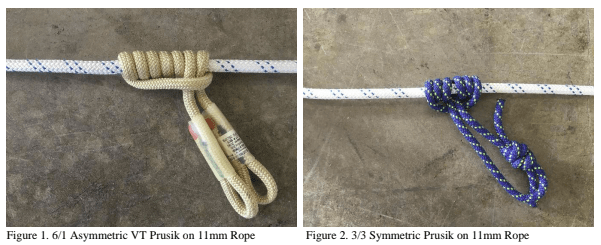
The Role of Rigging in Rescue Systems
Minimizing Human Error
In high-pressure situations, rescuers must rely on tools that simplify decision-making. The VT Hitch’s ease of use reduces the cognitive load on teams, allowing them to focus on mission-critical tasks rather than complex knot tying.
Adapting to Variable Conditions
From wet ropes to icy conditions, the VT Hitch demonstrates resilience across a range of environmental variables. This adaptability makes it a versatile choice for operations spanning mountain rescues, industrial rope access, and wilderness scenarios.
Future Applications
The testing of the VT Hitch underscores its potential in dynamic environments, such as those involving descender devices or rapidly changing loads. As more data emerges, its use in tandem with advanced systems like progress capture devices or load-sharing anchors will likely expand.
Final Thoughts
The VT (6/1) Prusik Hitch is more than a reliable piece of equipment; it embodies the principles of safety, efficiency, and innovation that define modern technical rescue. Its performance in static systems offers both a foundation for operational success and a model for future advancements in rigging technology.
In rescue and rigging, why a tool is chosen often matters as much as how it performs. The VT Hitch, with its proven reliability, ease of use, and adaptability, stands as a cornerstone of effective rescue systems. As we continue to push the boundaries of what’s possible, tools like the VT remind us that the smallest components can have the biggest impact on outcomes—and lives.
Overview
Peace on your Days
Lance



Comments are closed.