
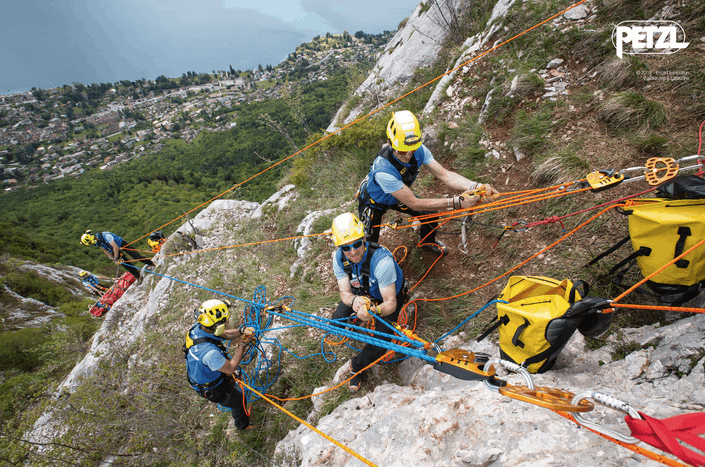
Comparison Between PETZL MAESTRO and PETZL I’D for Twin-Tensioned Haul Lines
In technical rescue operations, the PETZL MAESTRO and PETZL I’D both provide essential features for hauling, lowering, and managing loads. While these devices share some similarities, they differ significantly in ergonomics, specifications, and operational nuances. Here, we’ll explore their distinct features and how they perform in a rescue scenario using twin-tensioned haul lines.
Hauling Capabilities
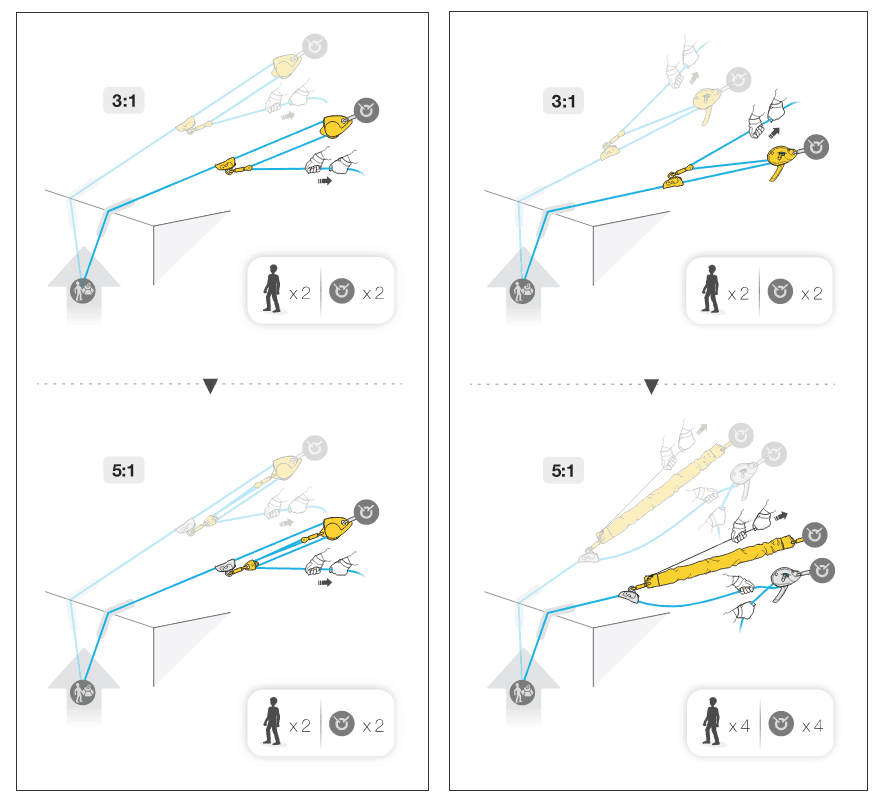
The PETZL MAESTRO excels in hauling efficiency due to its design and integrated features. It allows for the effective use of simple pulley systems, making it ideal for scenarios where quick deployment is critical. If a complex pulley system is required, the MAESTRO’s auxiliary attachment point enables easy integration of additional systems below the device.
On the other hand, the PETZL I’D often necessitates the use of parallel systems, such as the JAG SYSTEM, to enhance hauling efficiency. This approach requires an additional operator, increasing manpower demands compared to the MAESTRO. While both devices allow for hauling operations, the MAESTRO’s efficiency gives it an edge in single-operator scenarios.
Click Image Below
Working load for lowering with the device on the anchor Click Image Below

Lowering Operations
Working Load Specifications
Both devices are engineered for secure and controlled lowering of heavy loads, but their working load limits differ. These specifications make the MAESTRO more suitable for high-load scenarios.
Handle Ergonomics
The direction of handle operation varies between the two devices:
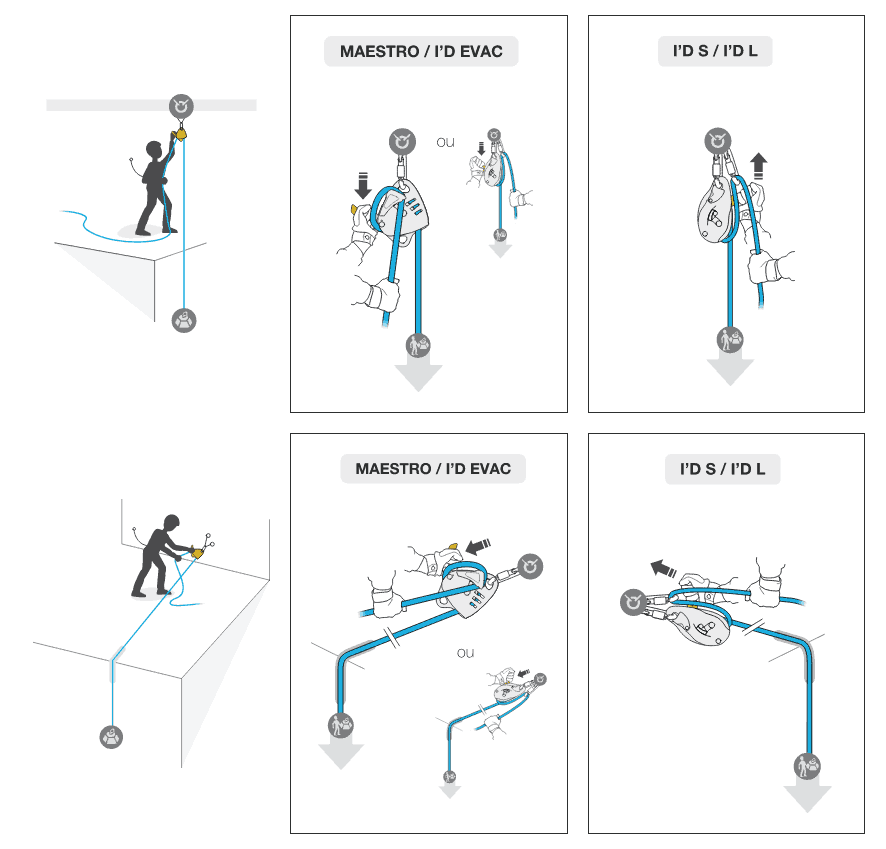
- MAESTRO and I’D EVAC: Handle operation requires pulling downward. This motion is ergonomically optimized for users positioned in front of or below the anchor, providing better control during lowering operations.
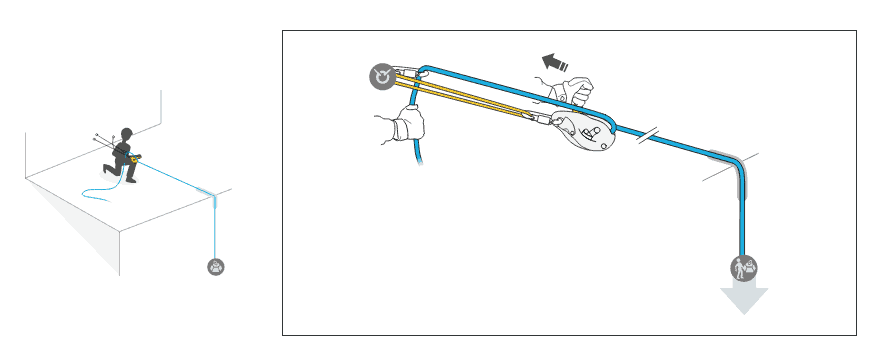
- I’D S and L: The handle operates in the traditional upward direction. This configuration is more ergonomic when the device is extended from the anchor, allowing the operator to maintain a clear line of sight with the load and rope.
Each handle direction suits specific setups and user positions, making it important to select the device based on the operational context.
On MAESTRO and I’D EVAC, the handle must be pulled downward, which offers optimal ergonomics when the user is in front of or below the anchor. Click Image Below
The handle on the I’D S and L is easier to use when the device can be extended from the anchor. This allows the user to position him/herself between the device and the anchor, so that the device, the rope and the load can be kept in line of sight. Click Image Below
Key Differences
- Hauling Efficiency:
- The MAESTRO integrates better with simple systems, offering superior efficiency without the need for complex setups.
- The I’D may require additional systems, increasing complexity and personnel requirements.
- Working Load:
- The MAESTRO supports higher loads, making it more versatile for demanding rescues.
- Handle Operation:
- The MAESTRO and I’D EVAC are optimized for downward handle operation, while the I’D S and L are better suited for upward operation.
- Setup and Integration:
- The MAESTRO’s auxiliary attachment point simplifies the addition of complex pulley systems.
- The I’D relies more heavily on external systems like the JAG SYSTEM for improved efficiency.
Choosing the Right Device
The choice between the MAESTRO and I’D depends on the specific rescue scenario:
- MAESTRO: Best for operations requiring high efficiency, single-operator use, or handling heavy loads.
- I’D: Suitable for scenarios where operators prefer a more traditional handle direction and can accommodate additional system setups.
For more insights into these devices and their applications, check out our resources at Rigging Lab Academy or explore the PETZL JAG SYSTEM for enhanced system efficiency.
FOR MORE ON THE PETZL MAESTRO AND I’D OR… The PETZL JAG SYSTEM
Peace on your Days
Lance


Comments are closed.