
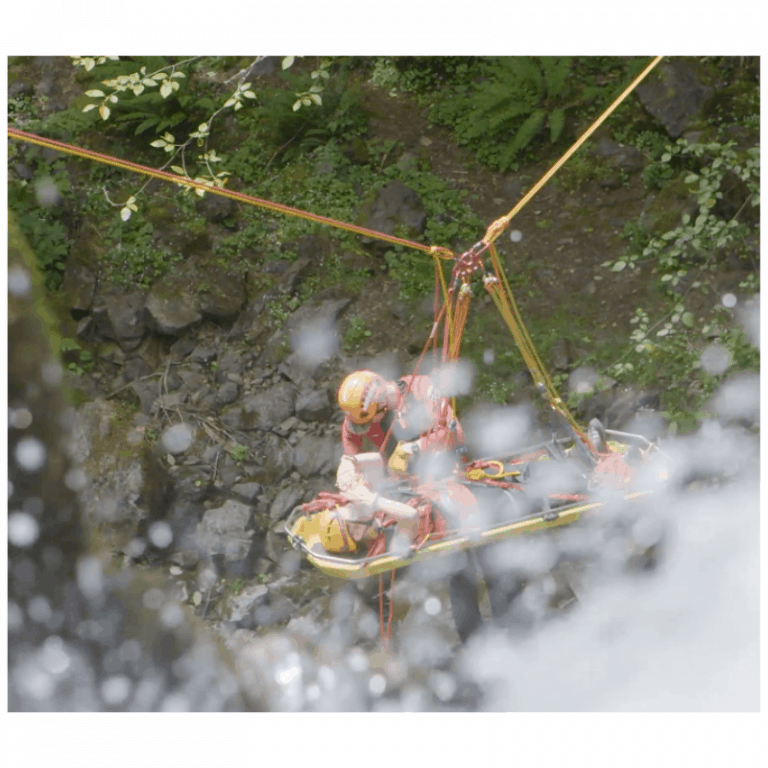
Tools vs. Knowledge: Which Matters More in Rigging and Rescue?
In technical rescue and rigging, the debate over the importance of tools versus knowledge is a frequent topic of discussion. While tools—such as carabiners, pulleys, and ropes—are essential for the work, they are inanimate objects that require the wisdom, understanding, and experience of the user to achieve their purpose. Similarly, knowledge alone, without the proper tools, can limit a rescuer’s ability to execute their plans. This dynamic reveals a deeper truth: tools and knowledge are two sides of the same coin, each incomplete without the other.
Understanding the Tools
Tools extend a rescuer’s ability to modify and manage their environment. Whether it’s using carabiners for secure connections, pulleys to build efficient mechanical advantage systems, or ropes for anchoring and movement, tools provide the physical means to solve complex problems. However, without the proper understanding of how and why to use them, these tools remain idle.
An anecdote illustrates this point well: a man once dreamed of winning the ultimate tool shop but realized that the tools alone would not build anything. It is the skilled craftsman who gives tools purpose and function.
Explore more on essential rigging tools in Rigging Lab Academy: Understanding Rescue Gear.
The Role of Knowledge
Knowledge provides the framework and reasoning behind the systems we build. It allows rescuers to:
- Understand the purpose of a tool or system.
- Adapt to unexpected challenges in real-time.
- Design safe, efficient solutions for unique scenarios.
At its core, knowledge gives tools their context, ensuring they are used effectively and safely. Training, experience, and ongoing education are the keys to unlocking the potential of any equipment.
Learn more about building foundational knowledge in Rigging Lab Academy: Core Training for Rescuers.
The Tools-Knowledge Connection
While tools and knowledge are often viewed as separate entities, they are intrinsically linked. Tools without knowledge lead to misuse or inefficiency, while knowledge without tools limits practical application. Together, they create a currency of exchange, enabling the rigging community to operate at its highest level.
Rescue Response Gear (RRG) and Rigging Lab Academy (RLA) embody this connection. As two sides of the same coin, RRG provides the tools, while RLA focuses on training and education. Together, they empower rescuers to turn their talents into strengths, offering both the gear and the understanding needed for success.
Why the Debate is Misguided
The question of whether tools or knowledge is more important may be the wrong one to ask. Instead, focus on understanding the interplay between the two:
- Tools enhance capability: The right equipment makes any job easier and more precise.
- Knowledge drives innovation: A deep understanding of tools and systems allows for creativity and problem-solving in complex situations.
By integrating tools and knowledge into a unified approach, teams can overcome challenges with confidence and efficiency.
Conclusion: A Unified Approach
In the rigging and rescue world, tools and knowledge are not adversaries but partners. Together, they enable professionals to navigate challenges, innovate solutions, and perform their duties with precision and safety. Whether through selecting the right gear or building a solid foundation of training, Rigging Lab Academy and Rescue Response Gear are here to guide you.
Explore our comprehensive resources to gain both the tools and knowledge needed to excel in your field:
Peace on your Days
Lance


Comments are closed.