3:1 HAUL SYSTEM

What Does the Anchor Actually See? Anchor Forces in Rope Rescue Haul Systems
Every anchor gets rigged for a number. Usually that number is the load: the weight of the patient, the litter, and the attendant hanging on

Every anchor gets rigged for a number. Usually that number is the load: the weight of the patient, the litter, and the attendant hanging on
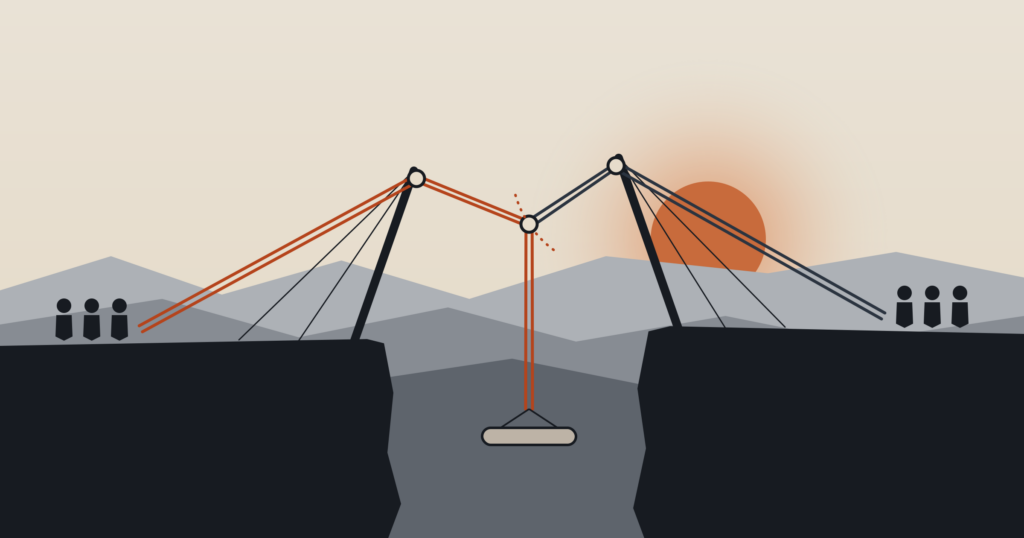
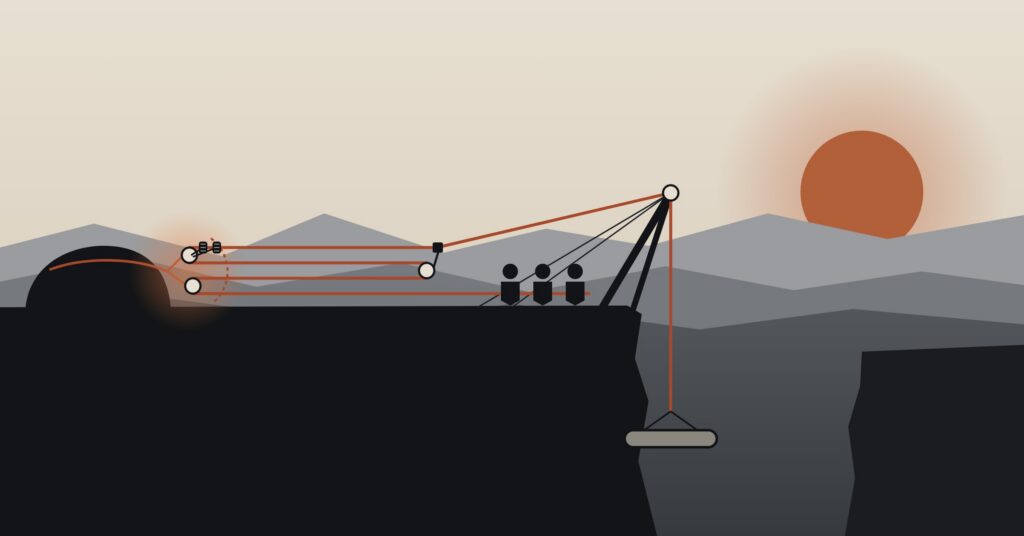
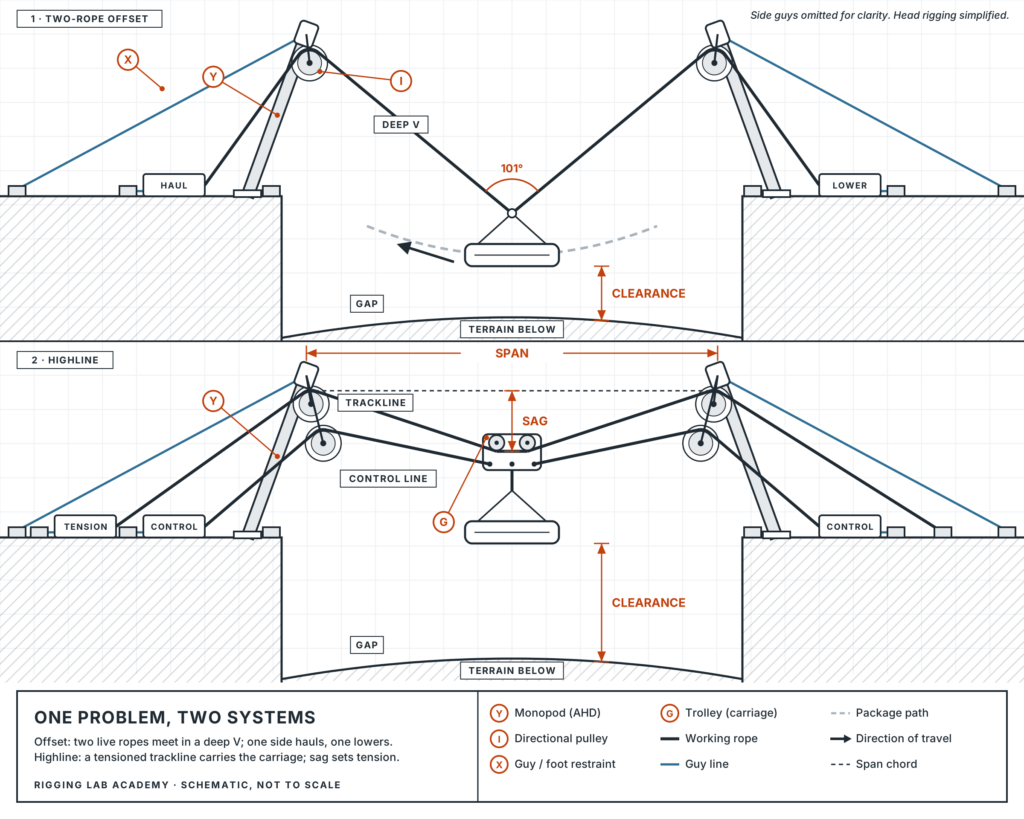
A rescue package must travel across a gap between two elevated positions, and the clearance beneath the crossing is limited. The crew has to move
A rope rescue technician may remember how to assemble a familiar system but struggle to predict how it will behave when the load, geometry, or
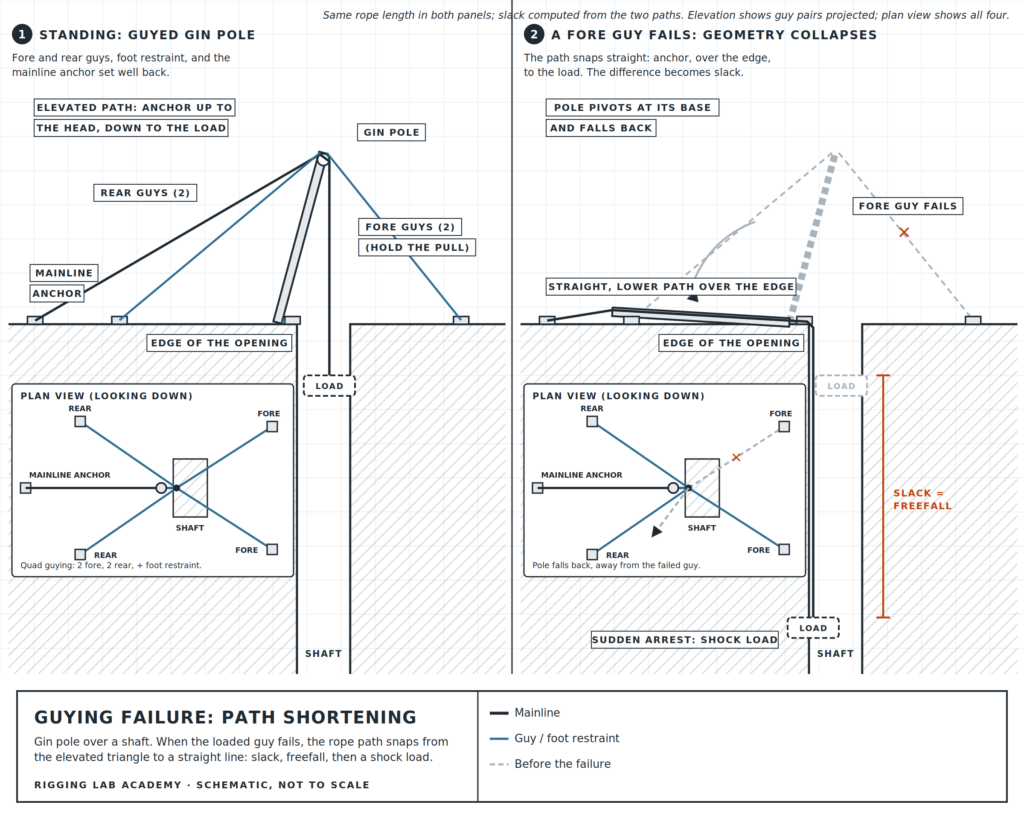
When a Guy Fails: The Hidden Consequences of Changing Rope Geometry Understanding gin pole failure, changing load paths, and why technical knowledge must be continually
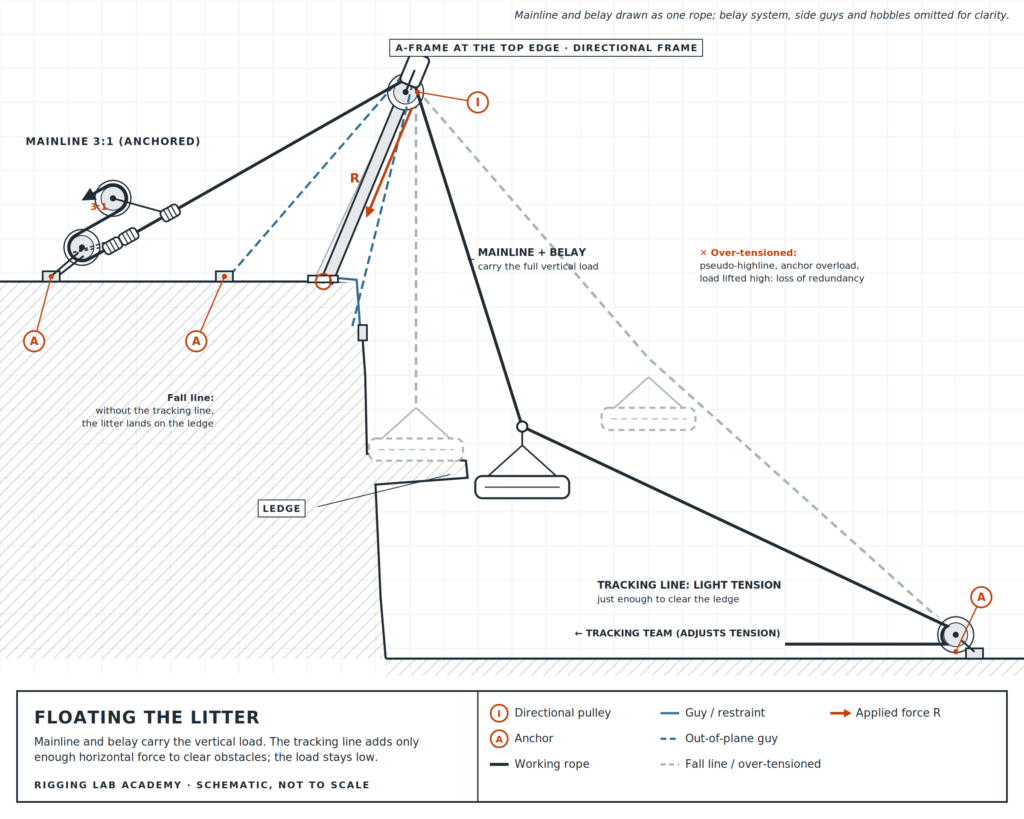
Floating the Litter: Why More Tension Is Not Better in Rope Rescue Tracking lines, load positioning, and the critical difference between moving a rescue package
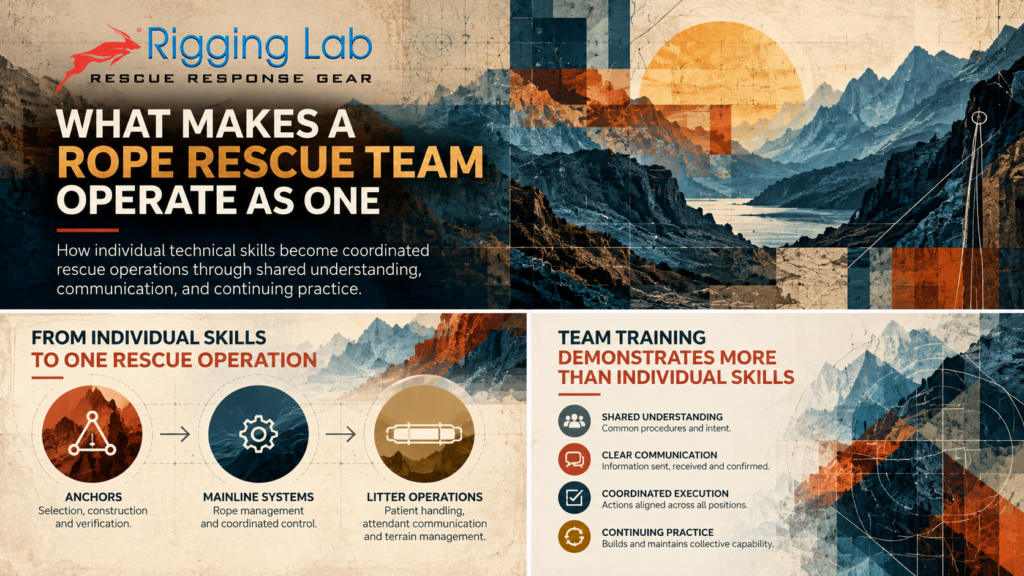
What Makes a Rope Rescue Team Operate as One How individual technical skills become coordinated rescue operations through shared understanding, communication, and continuing practice. From
When Familiar Training Meets Unfamiliar Conditions How rope rescue technicians develop the ability to retain, recognize, and apply what they have learned when circumstances change.
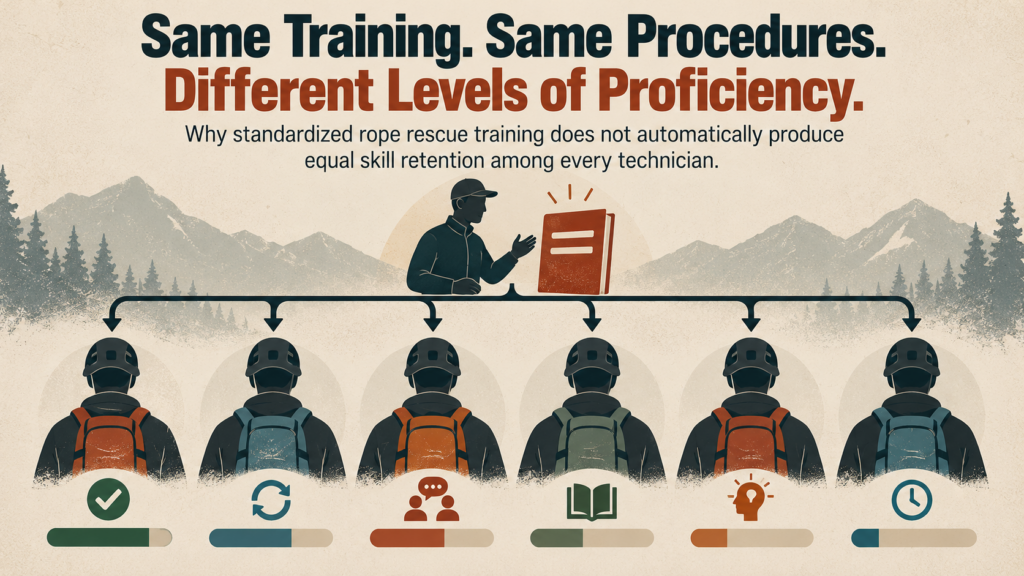
Same Training. Same Procedures. Different Levels of Proficiency. Why standardized rope rescue training establishes a common foundation, but maintaining individual proficiency requires continuing attention. One

The Illusion of Competence: When Rope Rescue Confidence Outruns Capability Why familiarity, experience, and certification do not always reveal what a rescue technician truly understands.
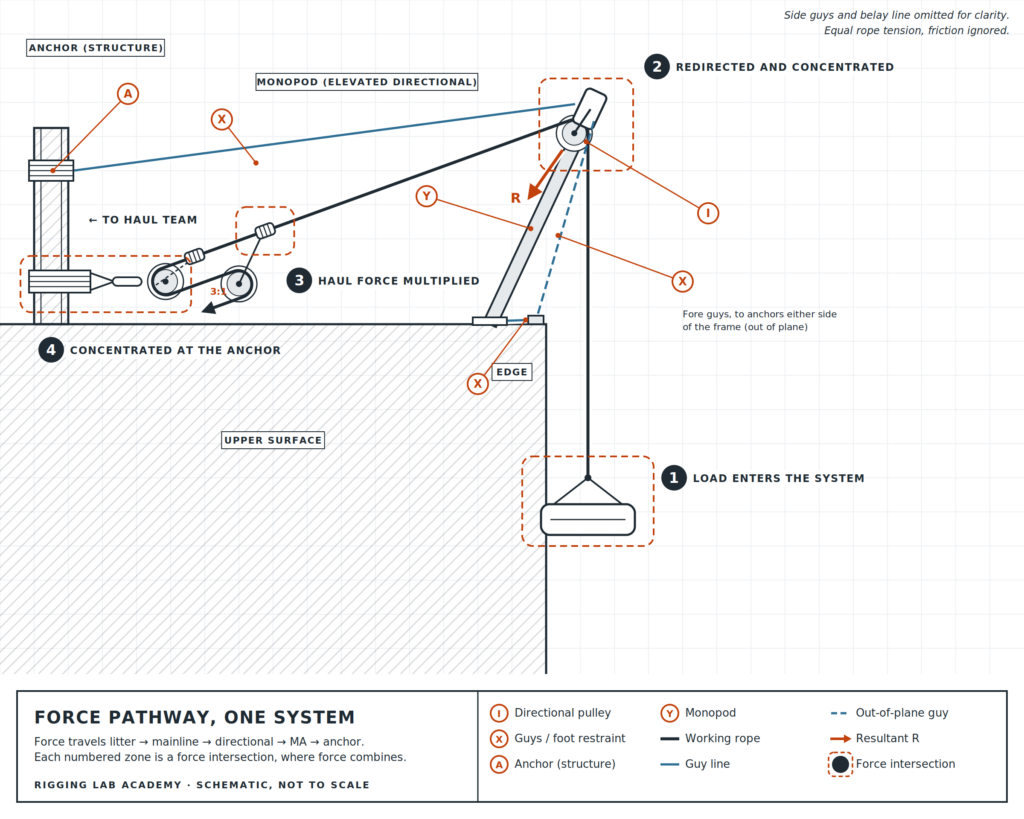
Rescue systems rarely fail because a single component gives out. They fail at force intersections, the points where loads meet, combine and change direction, and
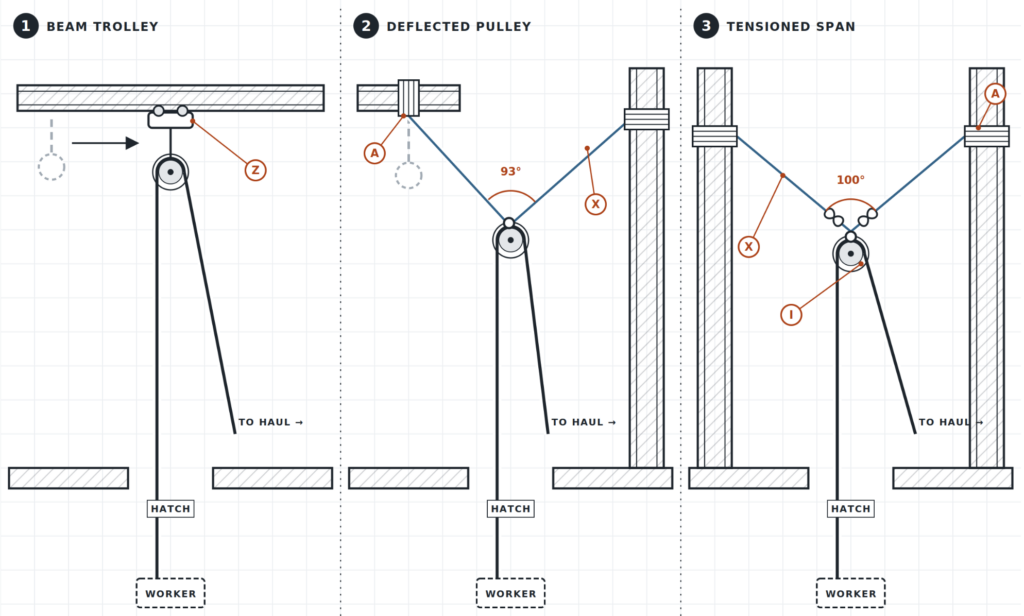
Applying Elevated Anchor Systems to Real Structures (or lack of one) A technician approaching a vertical shaft, tower platform, tank opening, or industrial access point
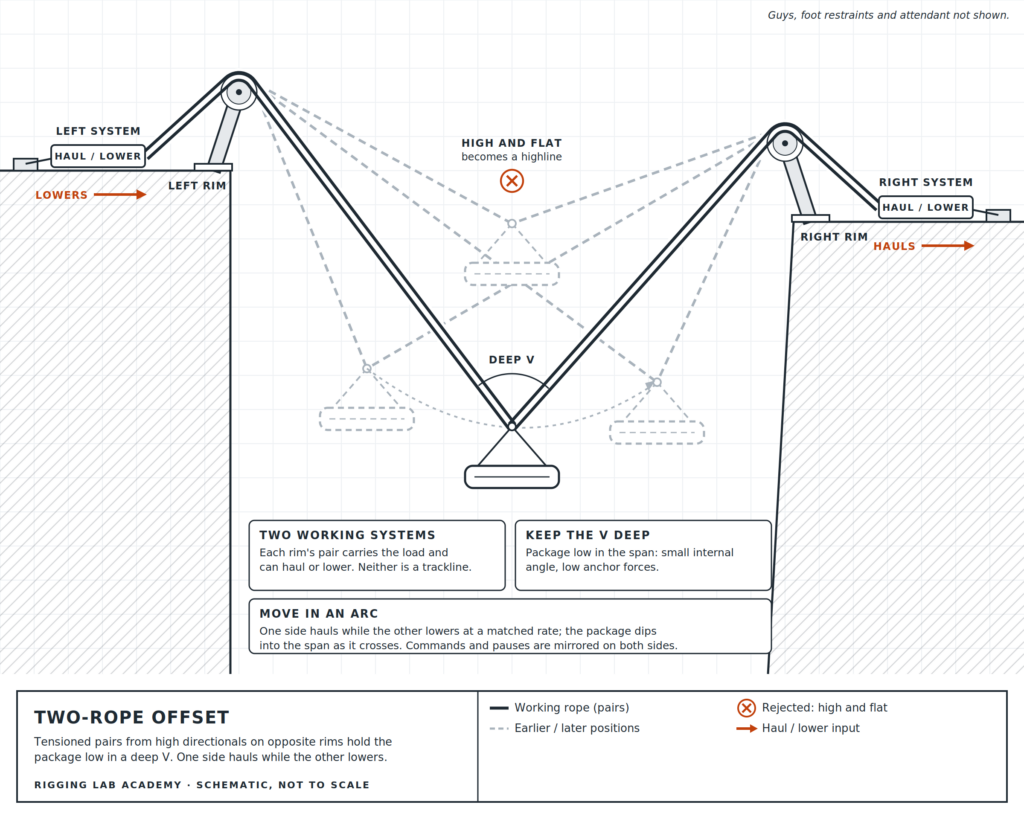
Sometimes a patient has to cross a gap: a canyon, a drainage, the space between two rims. The obvious answer is a highline, a tight
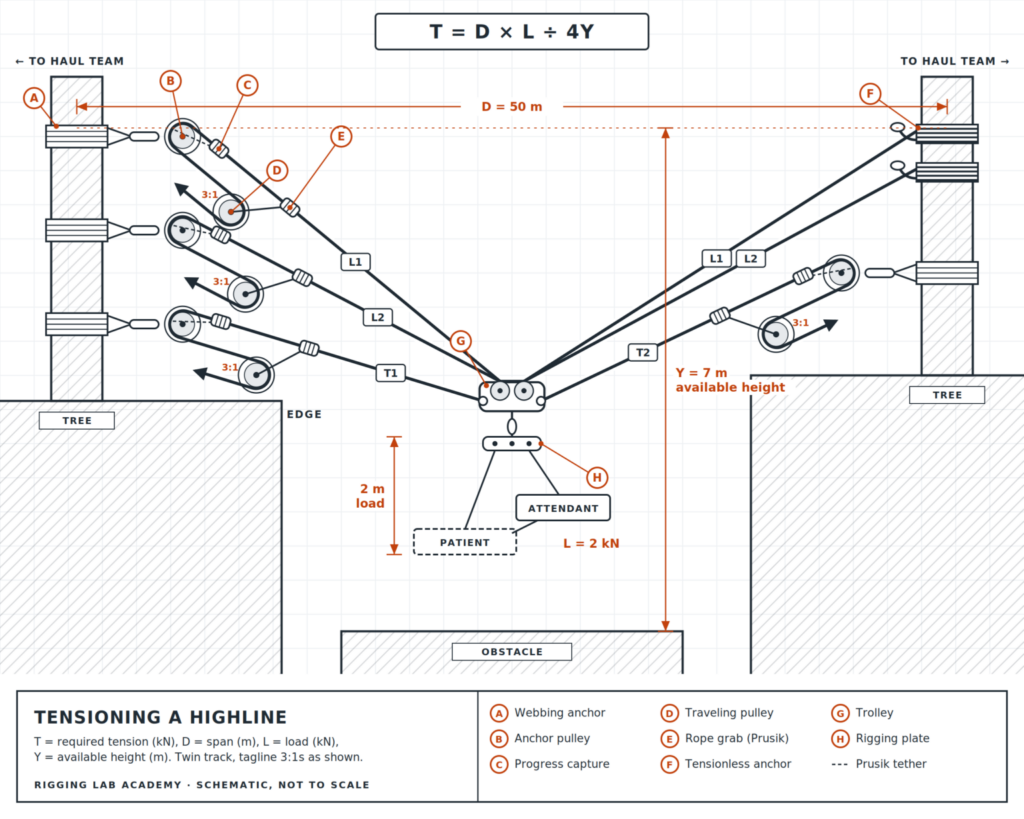
The full span is visible with the formula T=DL/4Y displayed at the top. The span is annotated at 50 metres anchor to anchor. A vertical
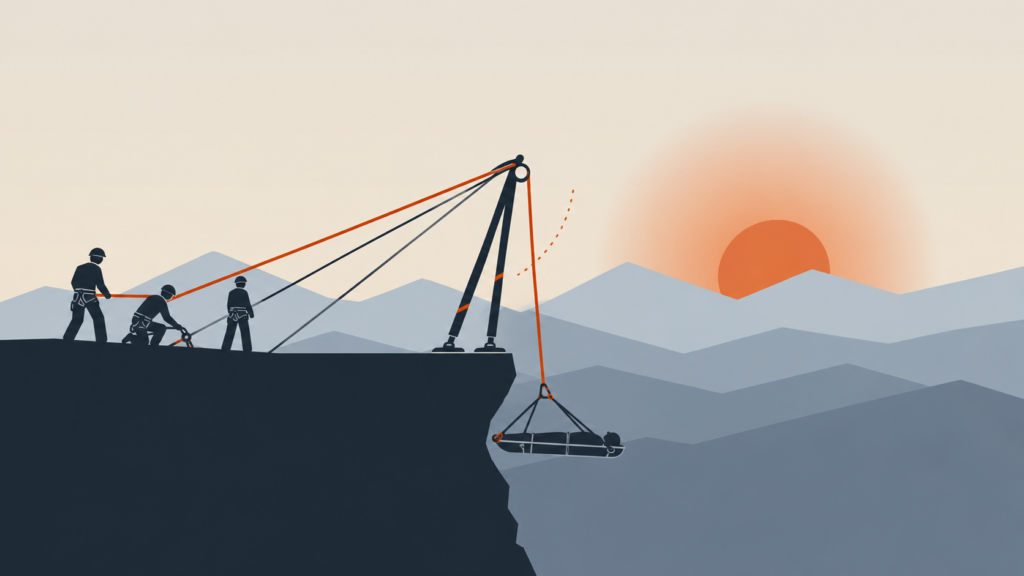
Failure Begins When the Load Path Stops Behaving as Intended Failure in an elevated anchor system does not begin only when a leg bends, a

The load on an elevated anchor is not fixed Most rescuers size up a high directional once: the load hangs below, the frame looks well
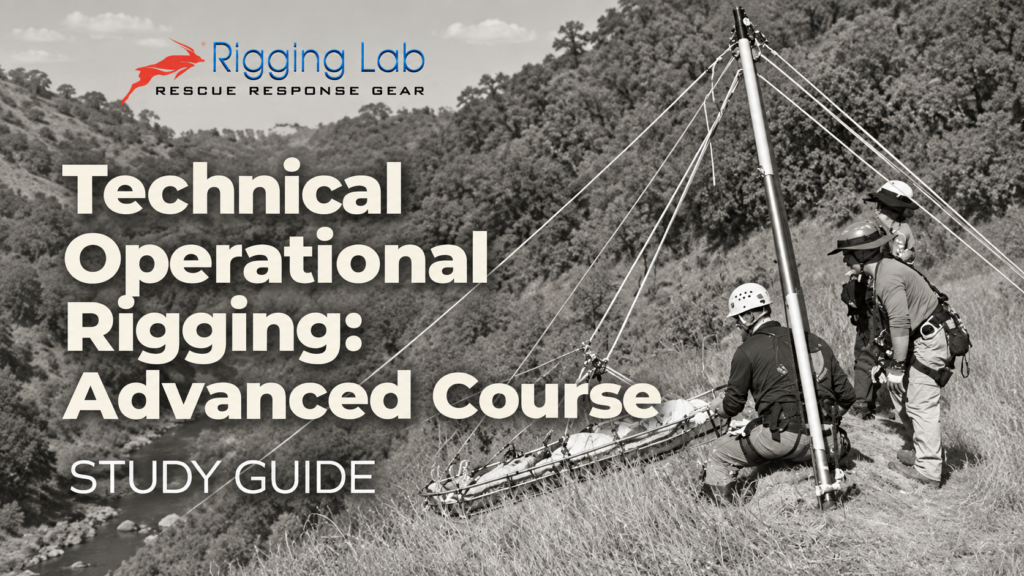
Sign Up for Free E-Book Technical Operational Rigging: Seeing the Entire System Technical Operational Rigging brings together skills that are often learned separately. Anchors, mechanical
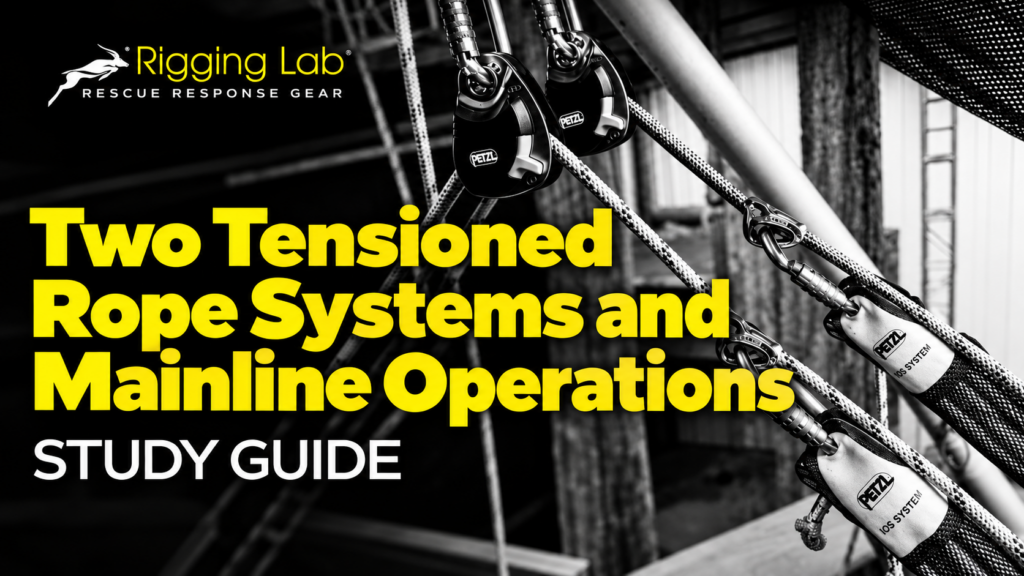
Sign Up for Free E-Book A rope rescue system can be built with strong anchors, rated hardware, familiar devices and the correct mechanical advantage—and still
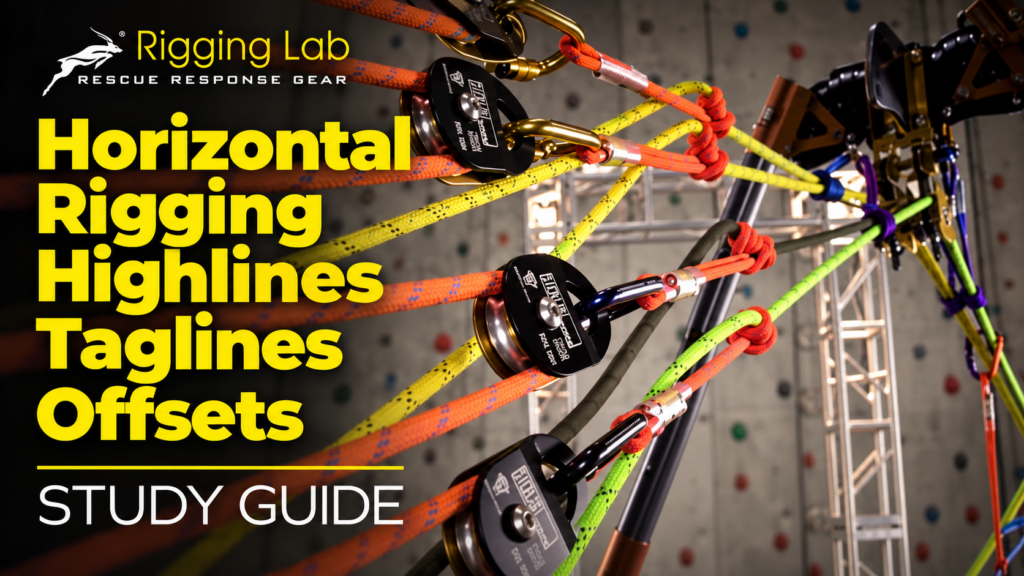
Sign Up for Free E-Book Horizontal rigging introduces a different set of problems than a straightforward vertical raise or lower. Once the rescue package has

The line every rope program refuses to say out loud Most rope rescue programs assume the technician who passed the course last year is still
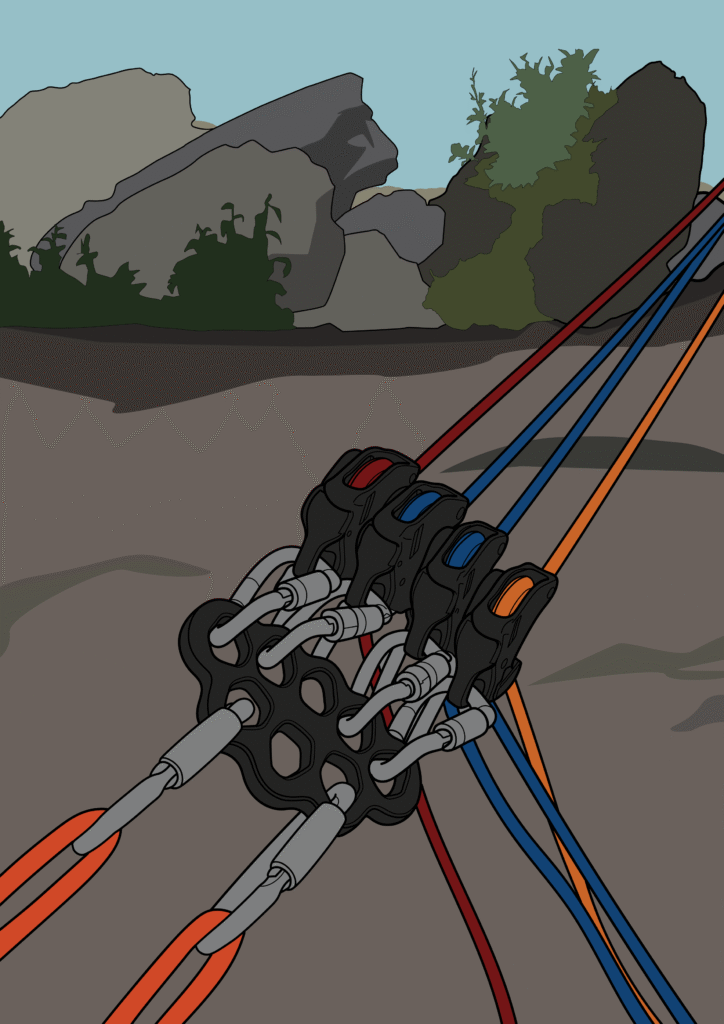
Walk up to a focal in training and watch what happens. Eyes go to the plate, the carabiners, the cams, the sling angles, the way